
Last updated November 15, 2026
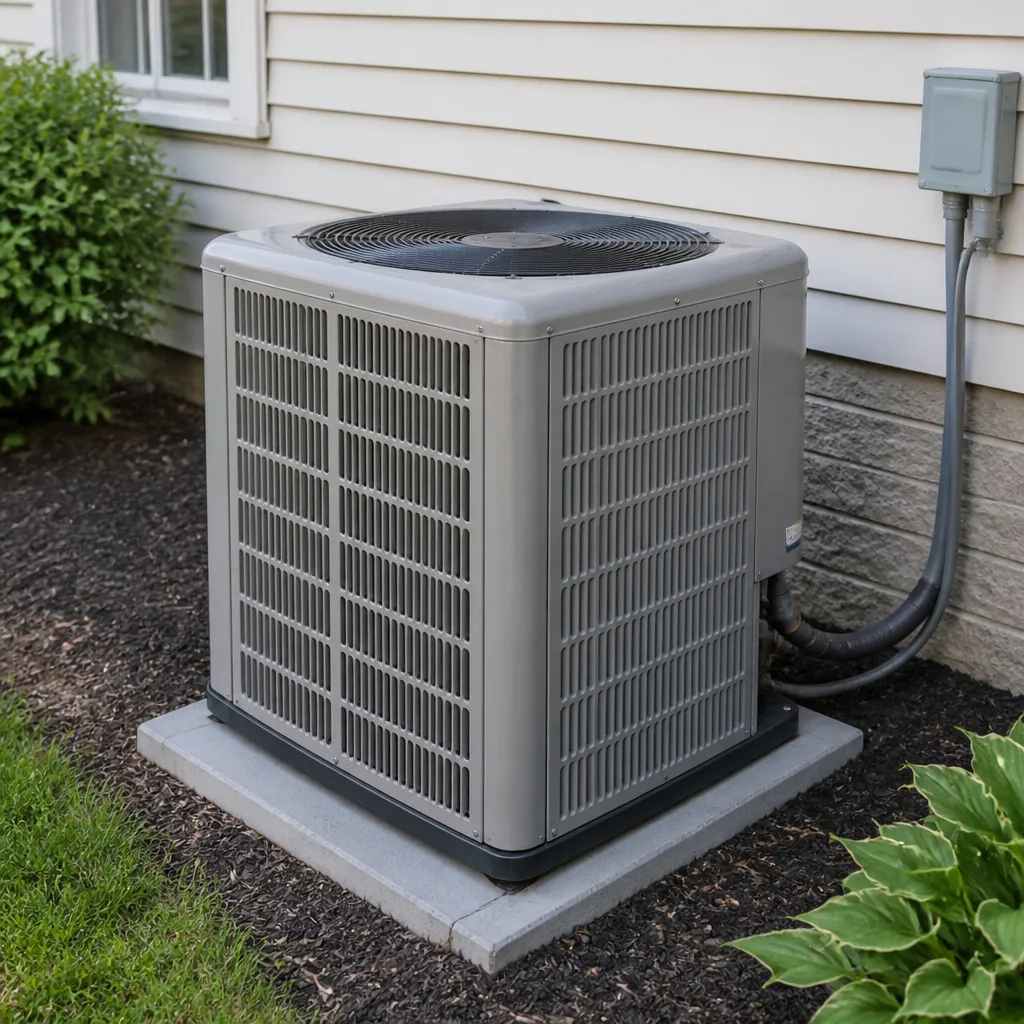 AC repair
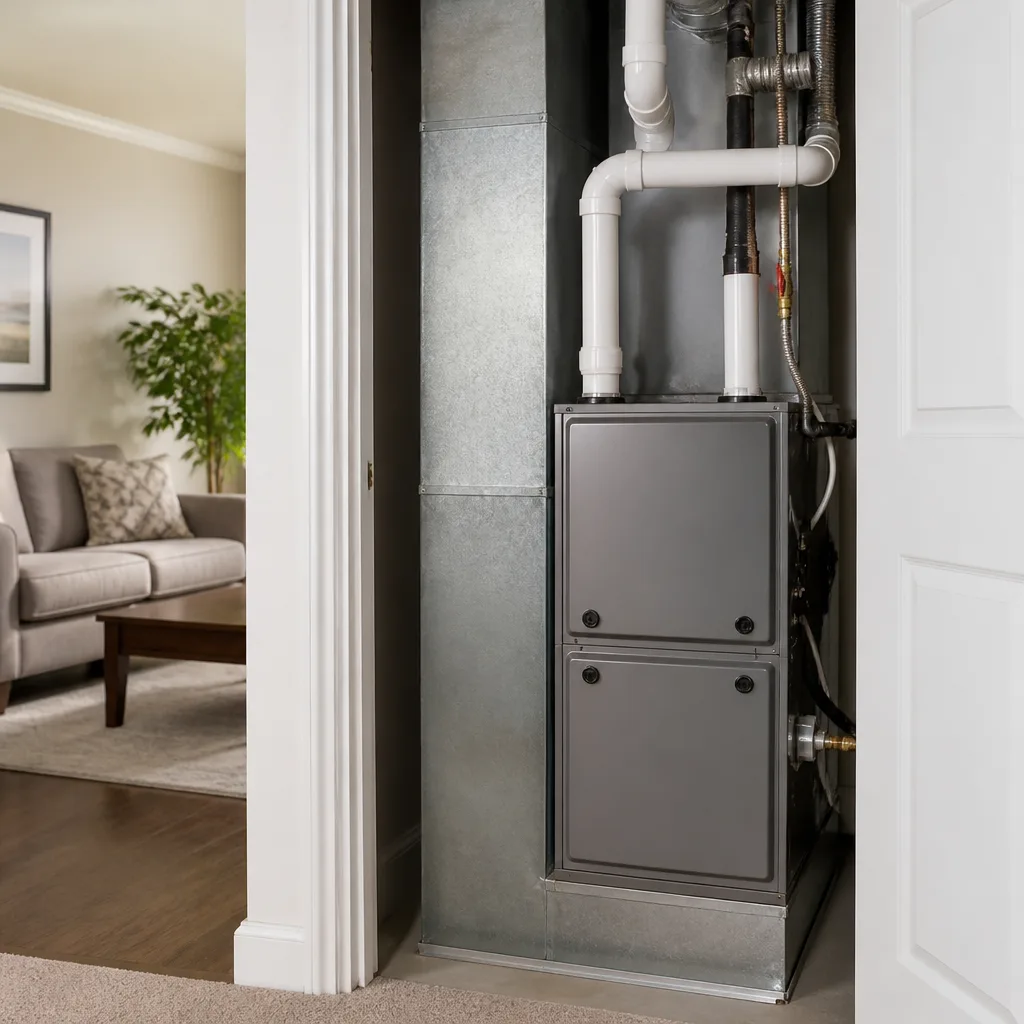 Furnace & heating
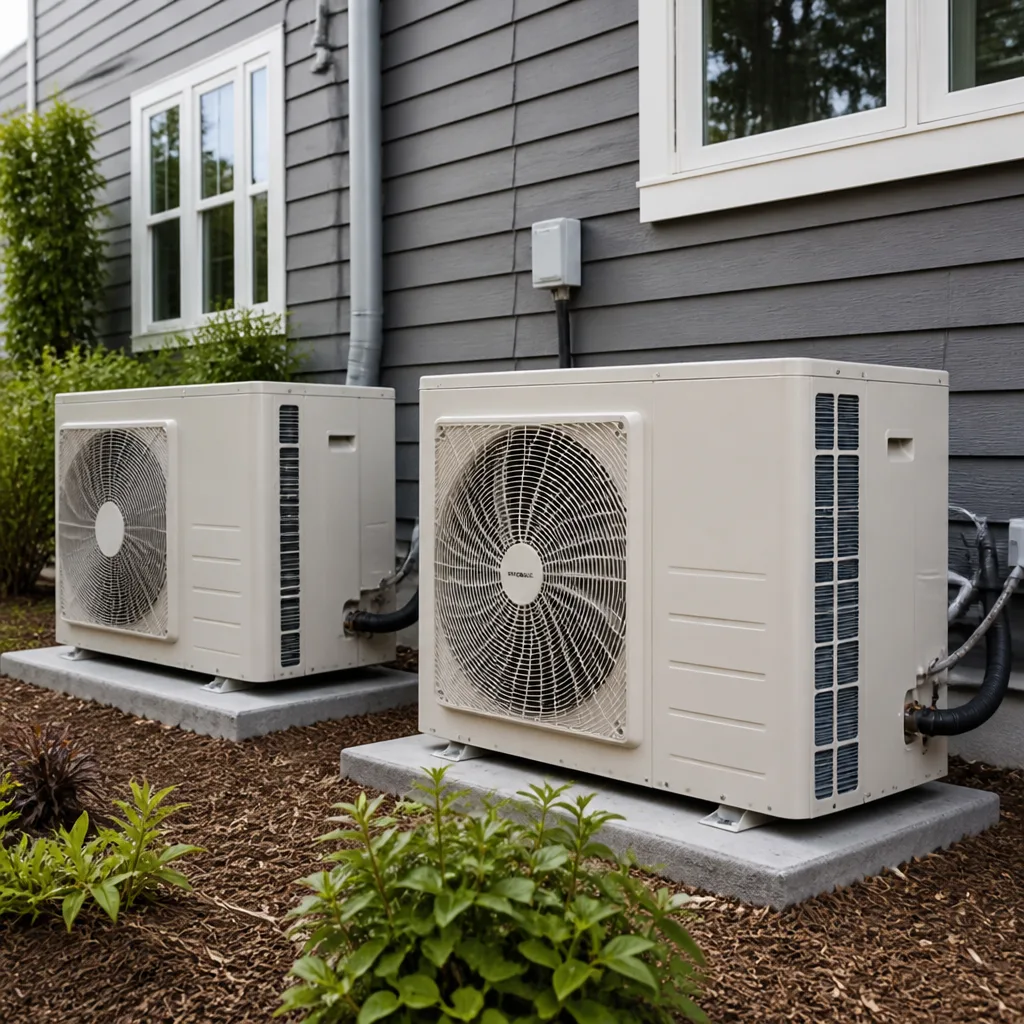 Heat pumps
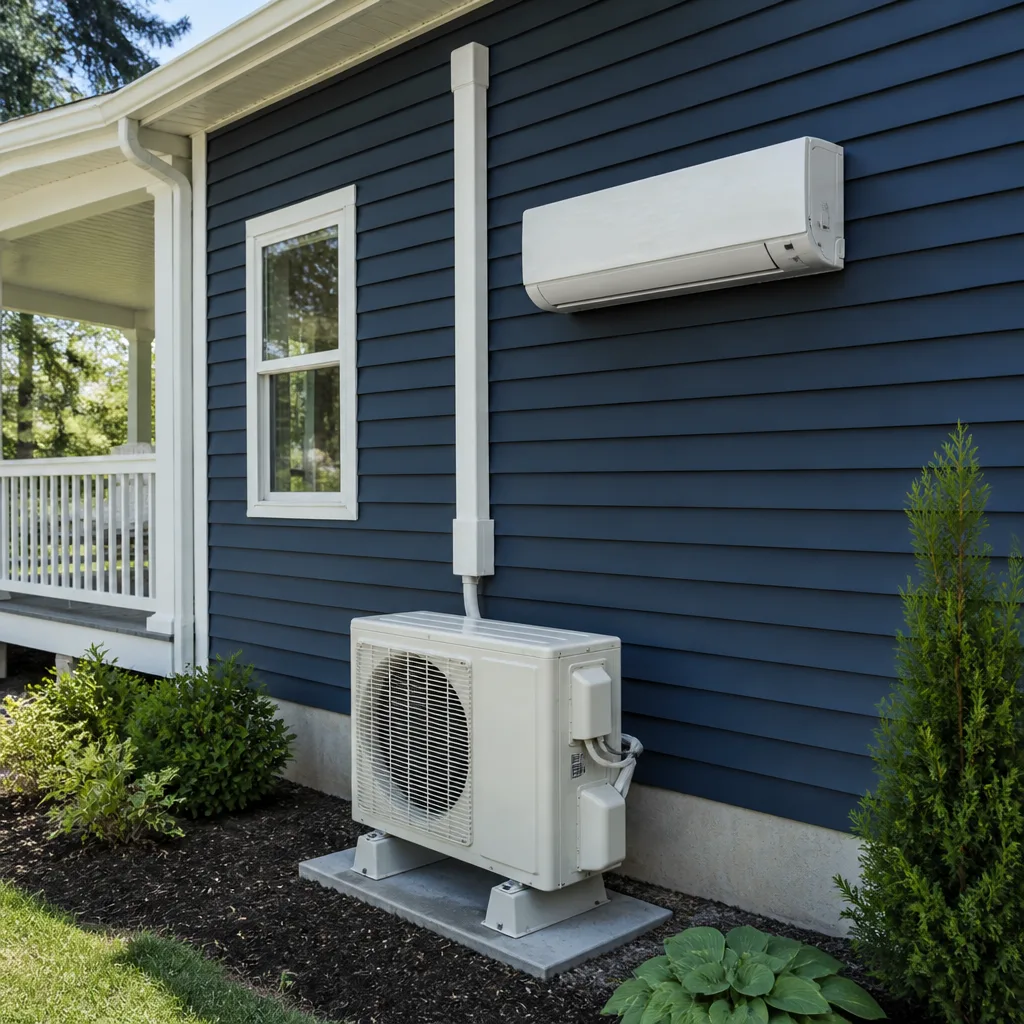 Ductless mini splits
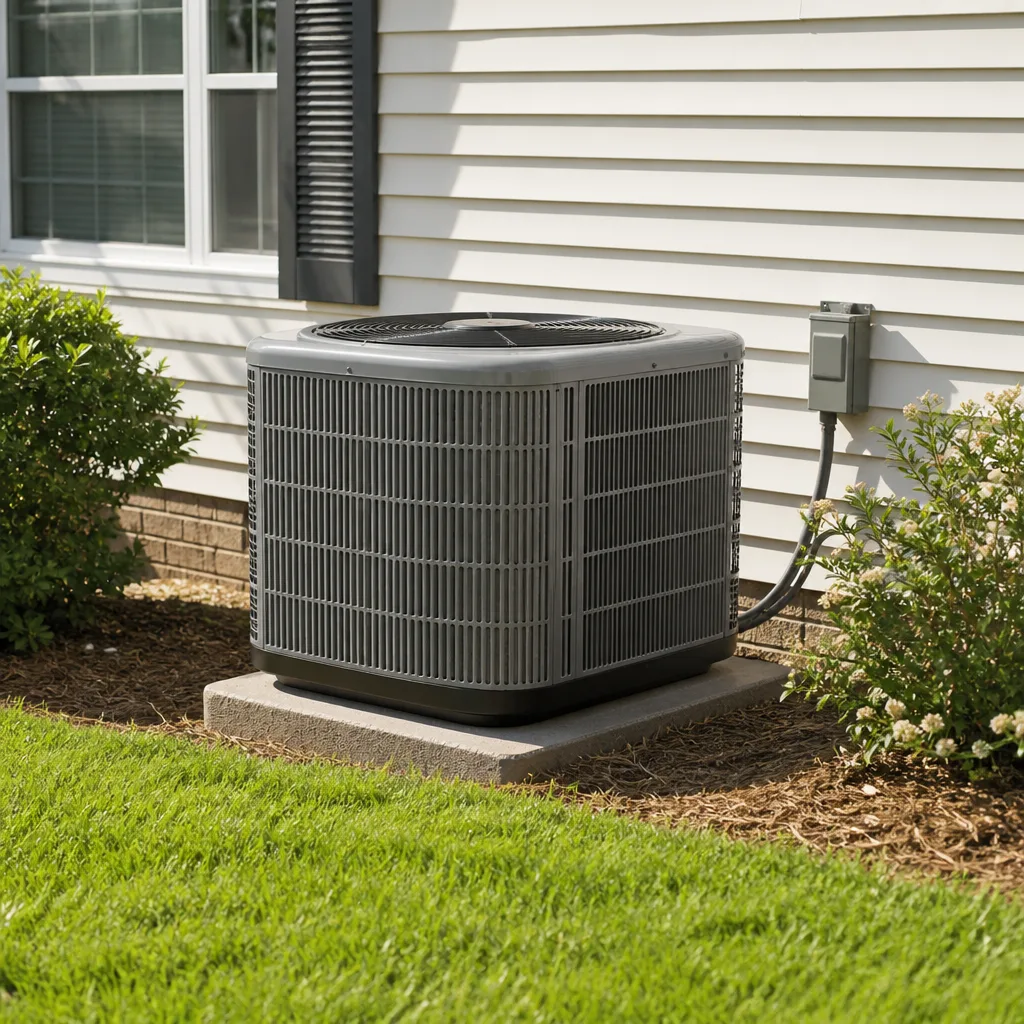 Carrier
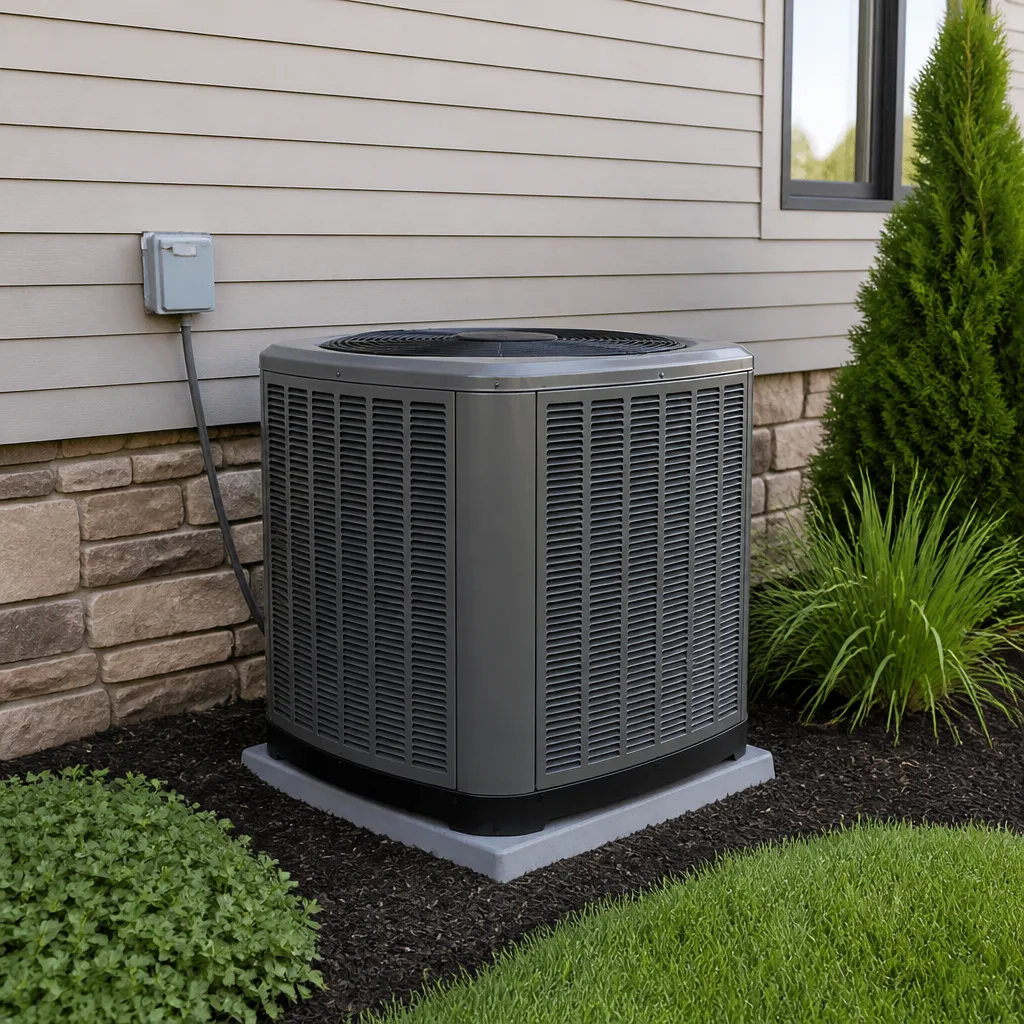 Trane
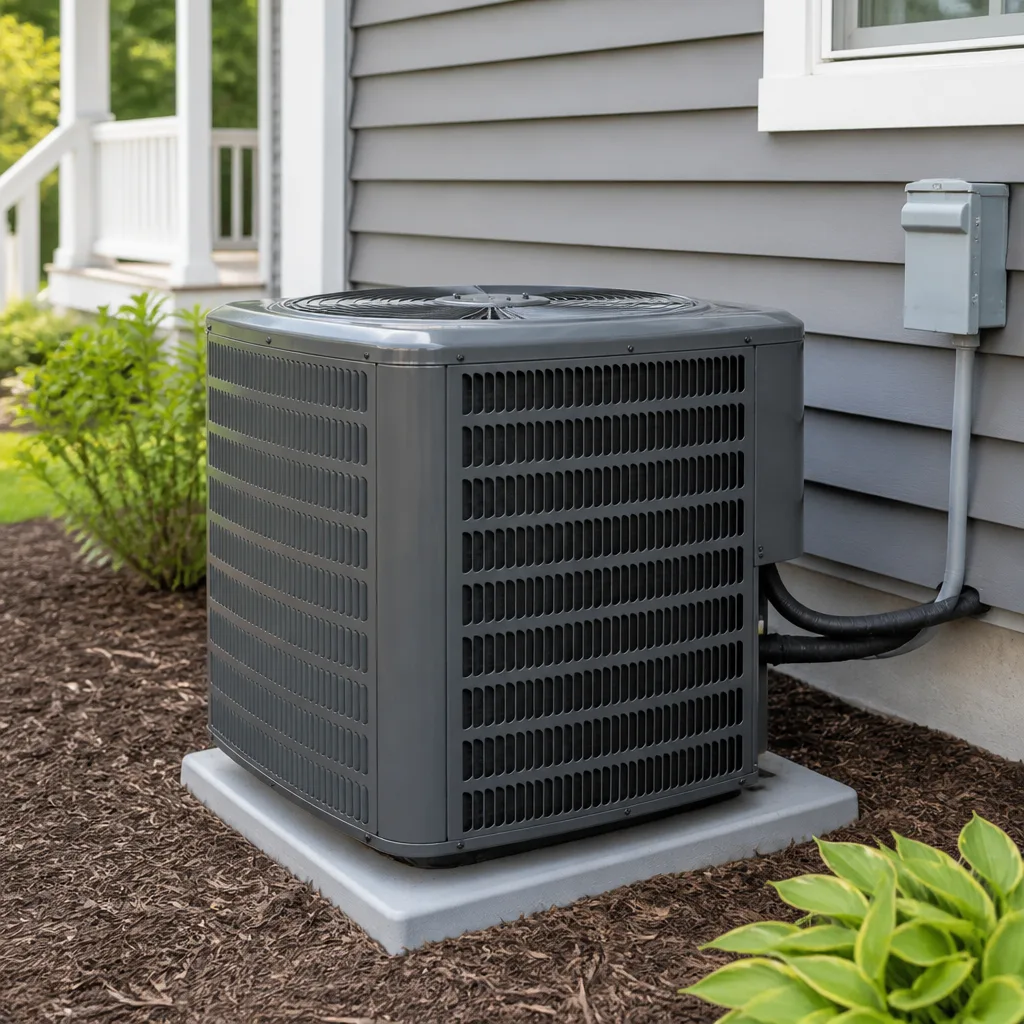 Goodman
Seasonal tune-up and full diagnostic on your Carrier, Trane, or Goodman system - readings shown to you before any repair is proposed
Diagnosis first, numbers second - you approve the repair price before a single part goes in.
Get your free estimateChoosing the Right HVAC Brand: A Buyer’s Guide for Mesquite
Most brand advice you’ll read is filtered through whoever is selling the equipment. A dealer who only installs one line will tell you that line is the answer, and that’s not a knock on them. It’s just how distribution works. The brand question gets asked backward in almost every guide: people pick a manufacturer first and then force their home to fit whatever that manufacturer makes. This guide flips it. You’ll learn how to start with the system type your Mesquite home actually needs, understand what SEER2 really means under a North Texas summer, read the local parts-and-service picture, and only then decide which brands build that system well. By the end you’ll know how to evaluate a brand recommendation without wondering whose margin it protects.
Quick Answer
The best HVAC brand for a Mesquite home is the one whose product line matches your load calculation, your existing ductwork, and your local access to parts and trained technicians – not the one with the biggest ad budget. For most Mesquite homes, that means matching system type to fuel access first (gas split, heat pump, or package unit), then comparing brands that have strong DFW service and parts support. Carrier, Daikin, Bryant, and American Standard all build equipment suited to this climate, but the right pick depends on your specific home and what your contractor can service well.
Styles & brands we work with
- AC repair
- Furnace & heating
- Heat pumps
- Ductless mini splits
- Carrier
- Trane
- Goodman
Table of Contents
- Why Picking a Brand First Is the Wrong Order
- Step One: Match the System Type to Your Mesquite Home
- SEER2 Reality in Mesquite’s Heat Load
- Parts and Technician Availability in the Dallas-Fort Worth Market
- The Single-Brand Dealer Bias Problem
- You Already Have a Working System From a Less-Marketed Brand
- How to Evaluate a Brand on the Dealer’s Lot
- What Brand Differences Actually Show Up in a Mesquite Home
Why Picking a Brand First Is the Wrong Order
When someone asks which brand is best, they’re usually asking the wrong question. What they really need to know is which brand builds the right system for their house, and those are two very different things. We’ve seen homeowners walk into a decision with a brand already fixed and then bend every other variable around it – duct size, fuel access, even the load calculation – to make the choice work. That’s backwards, and it usually costs more in the long run.
A manufacturer’s reputation is built on a product line, not a single furnace or air conditioner. Daikin builds ductless and inverter-driven systems that perform beautifully in part-load conditions. Carrier and Bryant (they share a corporate parent) both produce gas splits and packaged units that hold up in this climate. American Standard and Trane build the same core platform under different labels. None of them is universally “best.” Each is best at something.
Here in Mesquite, that matters because we sit in a specific pocket of the Dallas-Fort Worth climate. Summers are long, hot, and humid; the shoulder months are short; and long stretches of 100°F-plus afternoons push equipment toward full capacity more often than in milder regions. Equipment that performs well at part load – the low-speed operation that handles mild days – still has to survive the worst four weeks of the year. Not every brand line is equally good at both.
The order that actually works: determine your load calculation, identify the system type that fits your home and ductwork, check local parts and service support for that class of equipment, and only then start naming brands. If you’re not sure what system type you have now, an honest AC repair visit is often the fastest way to find out – a good technician will tell you what’s installed, what it’s doing well, and where it’s struggling before suggesting anything new.
Step One: Match the System Type to Your Mesquite Home
Before brand names enter the conversation, the single most useful decision you can make is what type of system your home should have. Brand choice is downstream of this. In Mesquite there are three practical routes, and which one applies to you depends on your fuel access, ductwork, and where the air handler can live.
- Gas split system: A gas furnace paired with an outdoor condenser and indoor coil. This is the most common setup in older Mesquite neighborhoods where natural gas is already at the meter. If you have a vented closet, attic, or garage-adjacent mechanical room with a gas line, this is usually the lowest-friction replacement path.
- Heat pump: A single outdoor unit that heats and cools by reversing refrigerant flow. Modern cold-climate and standard heat pumps handle North Texas winters comfortably, and they’re the cleanest choice for homes without gas service. Ductwork needs to be in good shape because heat pumps move more air than gas splits at the same capacity.
- Packaged unit: A single cabinet on the roof or a slab outside that contains both the condenser and the air handler. Common in certain Mesquite subdivisions where closet space is tight or the original design called for it. Packaged units are also easiest to swap when duct routing is fixed.
Each of these routes narrows the brand list before you’ve read a single brochure. A manufacturer with a deep gas-split lineup may be a weak choice if you’re going heat pump, and vice versa. Before you commit to a system type, confirm your electrical panel can handle the equipment being proposed – a heat pump with electric backup heat pulls serious amperage, and panel capacity is a real constraint in older Mesquite homes. That’s a conversation to have before brand selection, not after.
SEER2 Reality in Mesquite’s Heat Load
SEER2 is the current efficiency rating standard for central air conditioners and heat pumps, and it measures efficiency across a simulated season, not just at peak load. In Mesquite’s climate, the rating you should care about is not the top number on the box but the one that matches how many hours a year your system actually runs near its maximum.
Here’s the practical reality: a Mesquite home will run its air conditioner far more hours per year than a home in a milder climate. That means the difference between a mid-efficiency and high-efficiency unit generates real savings over the life of the equipment – but only if the rest of the system is set up correctly. A high-SEER2 condenser paired with undersized or leaking ductwork loses most of its advantage. So does a unit installed with a refrigerant charge that’s a pound off.
- Mid-efficiency: Meets current minimum standards, delivers solid performance, and costs less up front. Makes sense when the existing ductwork is marginal or when the budget needs to prioritize the installation itself.
- High-efficiency: Delivers measurable energy savings in a long cooling season like ours – but the savings only materialize if the ducts are sealed, the load calculation is right, and the install is done carefully.
- Marketing overshoot: The top of the efficiency range often exists for climate zones with much heavier heating loads than ours. In Mesquite, paying a premium for the highest available rating rarely pays back faster than a strong mid-to-high unit installed correctly.
Ask for the load calculation (Manual J) and the proposed system’s actual operating cost estimate at Mesquite’s design conditions. If a contractor can’t produce those, they’re selling a number, not a system. For a full AC installation, the written proposal should show the model number, the SEER2 rating, and the reasoning behind the size – not just a brand name and a price.
Parts and Technician Availability in the Dallas-Fort Worth Market
Here’s the factor almost no brand guide mentions, and it matters more than warranty length in a real emergency: how fast can a technician get the part? A 15-year warranty means nothing at 2 pm on a 103°F day if the compressor contactor for your specific model has to ship from a distribution center three states away.
In the Dallas-Fort Worth market, the big national brands all have local distribution, which is one reason Carrier, Trane, Lennox, Rheem, Goodman, York, Daikin, Bryant, and American Standard are the names you’ll see on contractors’ vans across Mesquite and surrounding cities. Parts availability for these nine is generally good. For less-distributed brands – some regional or budget-direct manufacturers – parts can be a week out, or special-ordered, or discontinued and unavailable. That’s the liability.
Ask any contractor you interview a specific question: “If my outdoor fan motor fails on this model, can you get a replacement from a local distributor, or is it shipping?” The answer tells you more about the brand’s practical value in Mesquite than any brochure. A brand with excellent engineering and thin local parts support is a great choice for a homeowner who can wait a week in summer. Not many Mesquite homeowners can.
Same logic applies to technician familiarity. Every manufacturer has its own control boards, error codes, and quirks. A technician who’s opened a hundred Carrier Infinity systems will diagnose a control fault faster than one who’s opened two. When you’re choosing a brand, you’re also choosing the pool of technicians who can service it well.
The Single-Brand Dealer Bias Problem
If you ask a Ford dealer whether you should buy a Ford or a Toyota, you already know the answer. HVAC brand recommendations work the same way. A contractor who only installs one manufacturer’s line has every structural incentive to recommend that line – not because they’re dishonest, but because their business model is built around it. Their training, their parts stock, their pricing tiers, and their marketing all point to one brand.
That doesn’t make single-brand dealers bad contractors. It makes their brand advice unusable as brand advice. What it does tell you is that they’ve built deep expertise in one platform, which is a real benefit for install quality. The trade-off is that you’re not getting a comparison; you’re getting a confirmation.
The alternative is to get the recommendation from a contractor who works on many brands and can tell you honestly which system fits your house. We work on nine major brands – Carrier, Trane, Lennox, Goodman, Rheem, York, Daikin, Bryant, and American Standard – which means our recommendation isn’t tied to any one manufacturer’s margin. We don’t have a preferred line, because we’re not a dealer for any of them. That’s not a marketing line, it’s a structural difference that shows up in what homeowners actually get told.
If you’re in Mesquite and shopping for a new system, ask two questions of every contractor: “How many brands do you install?” and “How many do you service?” If the first answer is one and the second answer is one, you’re talking to a dealer. That may be fine, but you should know what you’re getting before you sign.
You Already Have a Working System From a Less-Marketed Brand
Plenty of Mesquite homeowners have a perfectly respectable system from a brand they’ve never seen advertised. Maybe the previous owner chose it, or the builder installed it, or it was what the last contractor stocked. If it’s working – or working with issues – you’re often better off staying with that equipment than switching platforms. Brand loyalty is not a value in HVAC; reliability, parts access, and competent service are.
The question isn’t “should I switch brands” but “can this brand be serviced well here.” That’s answerable.
- Look at the nameplate. Find the model number on the outdoor unit and the air handler. That tells any honest technician what platform you’re on.
- Ask what’s available. A quick call to a contractor who services multiple brands should tell you whether common parts for that model are on local shelves or hard to source.
- Get a repair quote before a replacement quote. If the system is fixable at reasonable cost, fixing it beats replacing it. Replacement makes sense when the repair cost is high relative to remaining life, or when the equipment has failed at a part that’s discontinued.
- Check for a service record. If a technician can show you a maintenance history, you know whether the unit has been cared for or neglected.
We’ve seen plenty of homes in Mesquite running equipment that isn’t a household name and running it well. There’s no reason to replace a functioning system just to join a more recognizable brand. Get a straight answer on what it needs – sometimes that’s a $200 part and a recharge, sometimes it’s a compressor, sometimes it’s a new system. But you should hear all three options before you decide.
How to Evaluate a Brand on the Dealer’s Lot
Once you’ve settled on a system type and checked the local service picture, here’s how to actually compare brands. This is the point where the marketing brochures become useful – if you know what to look at.
- Model-specific service bulletins: Every brand has known problem areas on specific model families. Ask whether any apply to the equipment being proposed.
- Warranty fine print: Registration requirements, labor coverage, and parts exclusions vary widely. A longer parts warranty that requires online registration within days of install is not the same as one honored automatically.
- Replacement parts lead time: Ask how long a common blower motor, ignitor, or control board takes to arrive for the proposed model.
- Matched-system coordination: Condensers, coils, and air handlers are engineered to work as a set. A mismatched system loses efficiency and warranty coverage. If the contractor is mixing brands across components, ask why.
- Heat-pump performance at low outdoor temperature: If you’re going heat pump, ask for the model’s capacity curve. In North Texas the coldest nights are usually in the 20s, and most modern heat pumps handle that fine – but check the number, not the adjective.
None of this requires you to become an HVAC engineer. It requires you to ask questions that a good contractor will answer and a bad one will deflect. If a contractor can’t tell you why a specific model was chosen for your specific house, that’s your signal.
What Brand Differences Actually Show Up in a Mesquite Home
Brand differences are real, but they don’t show up where marketing says they do. Over hundreds of service visits across this area, the distinctions we notice between brands are not about reliability in the abstract. They’re about control systems, serviceability, and how well the equipment was installed in the first place.
Carrier and Bryant (shared platform) tend to have well-documented control systems and clear error codes, which makes diagnostics straightforward. Daikin’s inverter-driven equipment performs noticeably well on part-load days – cooler weather, lighter cooling loads – which matters in Mesquite’s long shoulder seasons. American Standard shares a platform with Trane, so techs familiar with one usually know the other. These aren’t marketing claims; they’re the pattern that comes out of opening panels.
Installation quality outweighs brand choice more often than any manufacturer would like to admit. A well-sized, well-sealed, correctly charged mid-tier system will outperform a poorly installed premium unit every time in this climate. The brand should be the last variable, not the first – and the contractor’s attention to detail should be the first, not the last. If you’re in Mesquite and unsure which way to lean, this is where a Whitman AC Repair technician can give you an honest read without a sales pitch.
One more local consideration: attic ductwork in Mesquite homes takes a beating from summer heat. Some branded air handlers are designed with cabinets that handle attic conditions better than others, and some condenser cabinets resist sun damage longer. Ask how the equipment was built to survive here, not how it performs in a lab.
Common Mistakes to Avoid
- Letting the brand decide the system type. If you’ve fallen in love with a brand before checking what system fits your home, you’re going to install something that doesn’t match. Do the load calculation first.
- Buying the highest-SEER2 unit on the shelf. Peak efficiency rarely pays back in Mesquite’s cooling profile unless the ductwork and install are already excellent. The mid-to-high tier is usually the sweet spot here.
- Skipping the duct check. A new condenser on aging ductwork loses much of its efficiency and can create pressure problems that shorten equipment life.
- Taking brand advice from a single-line dealer without knowing their model. There’s nothing wrong with a dealer recommending their own line – but it isn’t brand advice, it’s a business decision. Know the difference.
- Overlooking local parts availability. A brand with strong distribution in the DFW area is worth more to a Mesquite homeowner than a marginally better spec sheet.
- Replacing a serviceable system. If a technician can fix your current brand at reasonable cost and it has remaining life, switching brands is not the move.
- Mixing components without asking. A condenser from one brand and an air handler from another can void warranties and lose efficiency. If the proposal crosses brands across components, ask why.
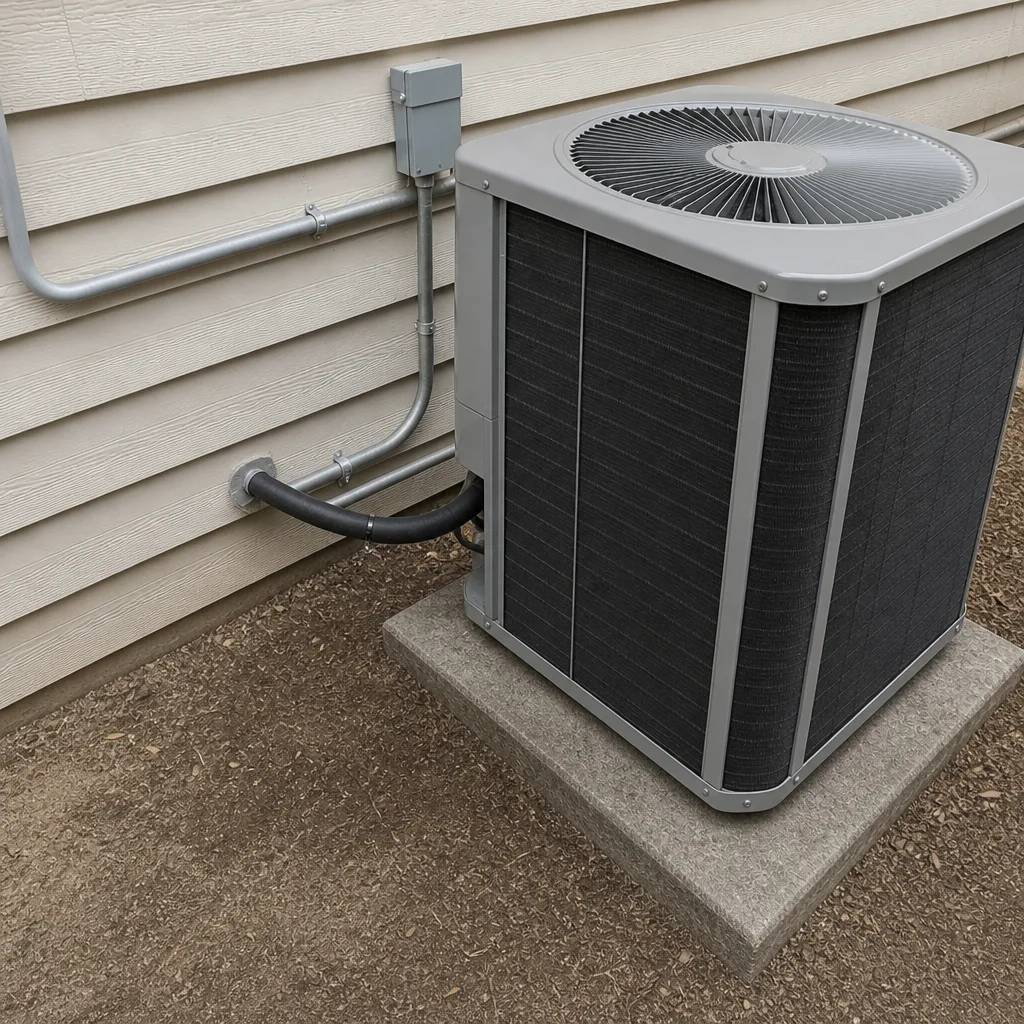
See the difference
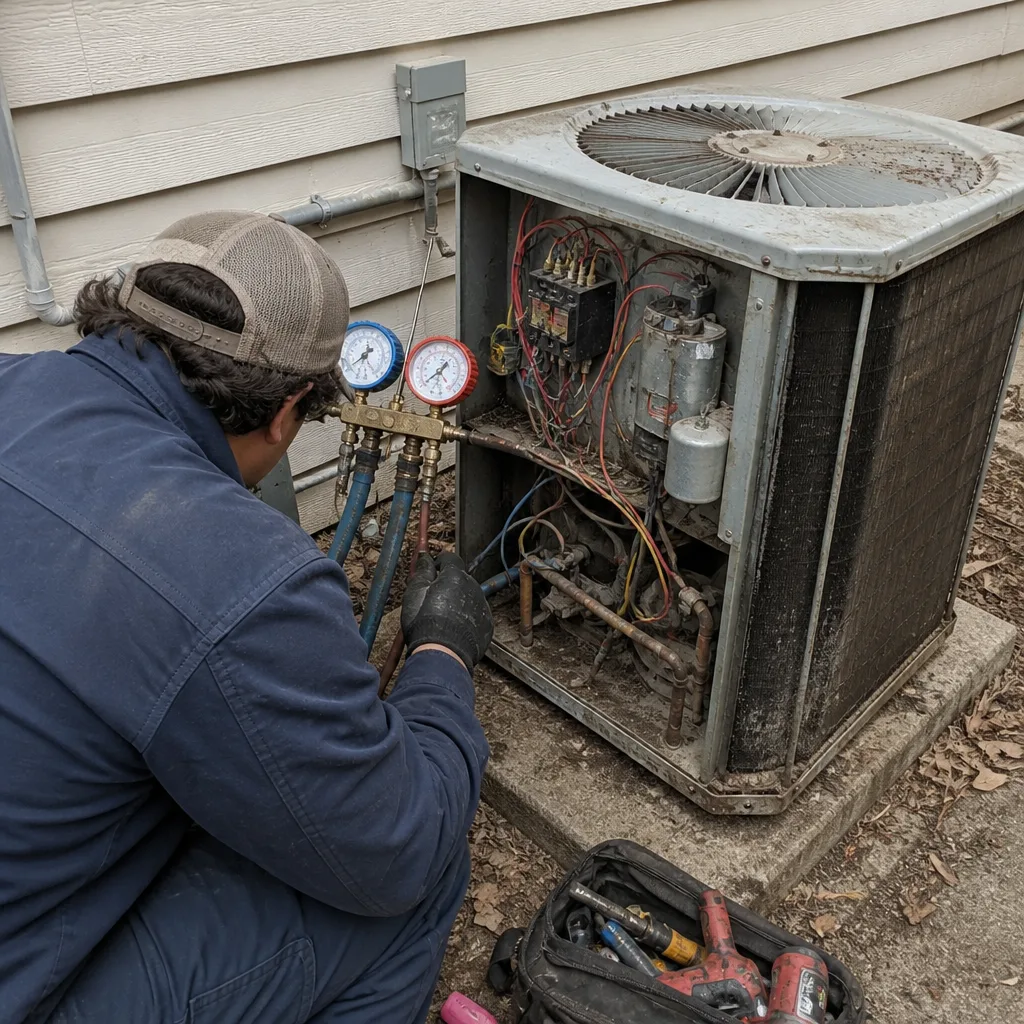 Before
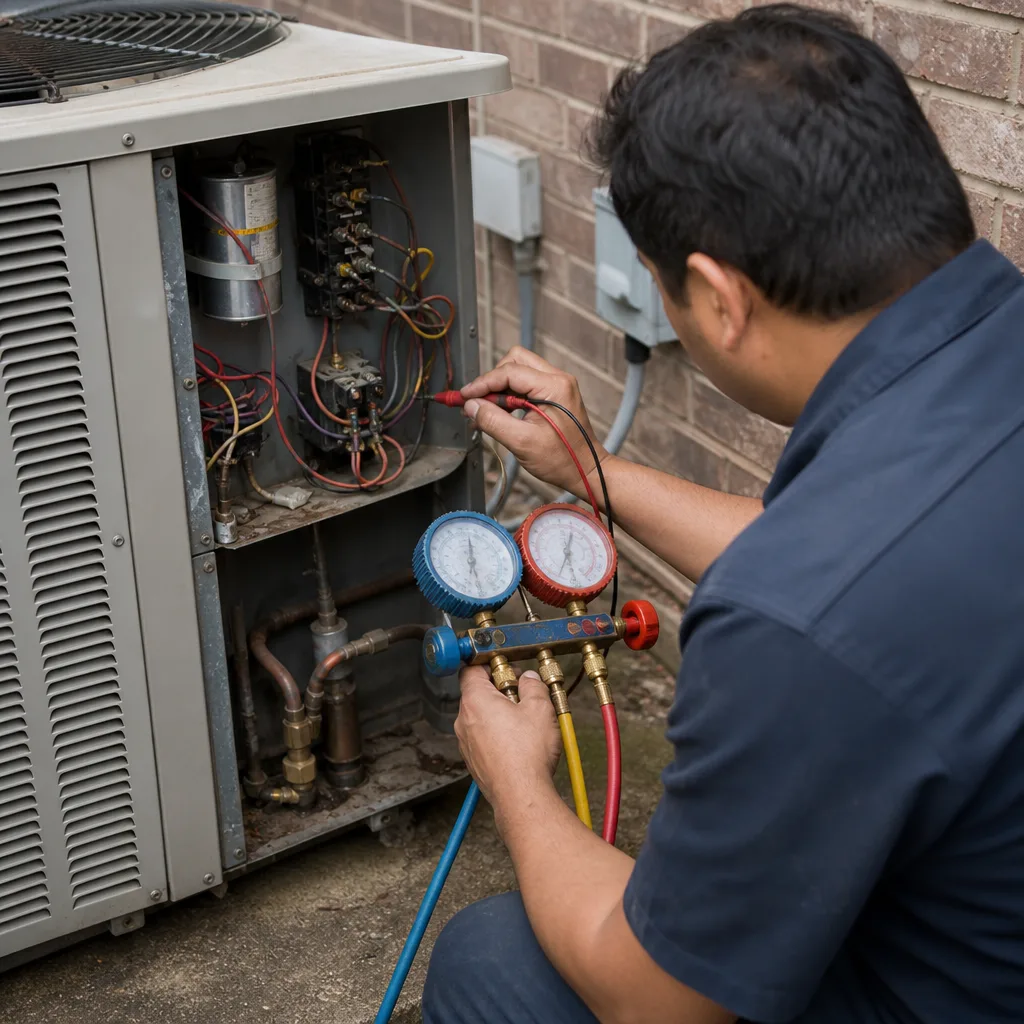
 After
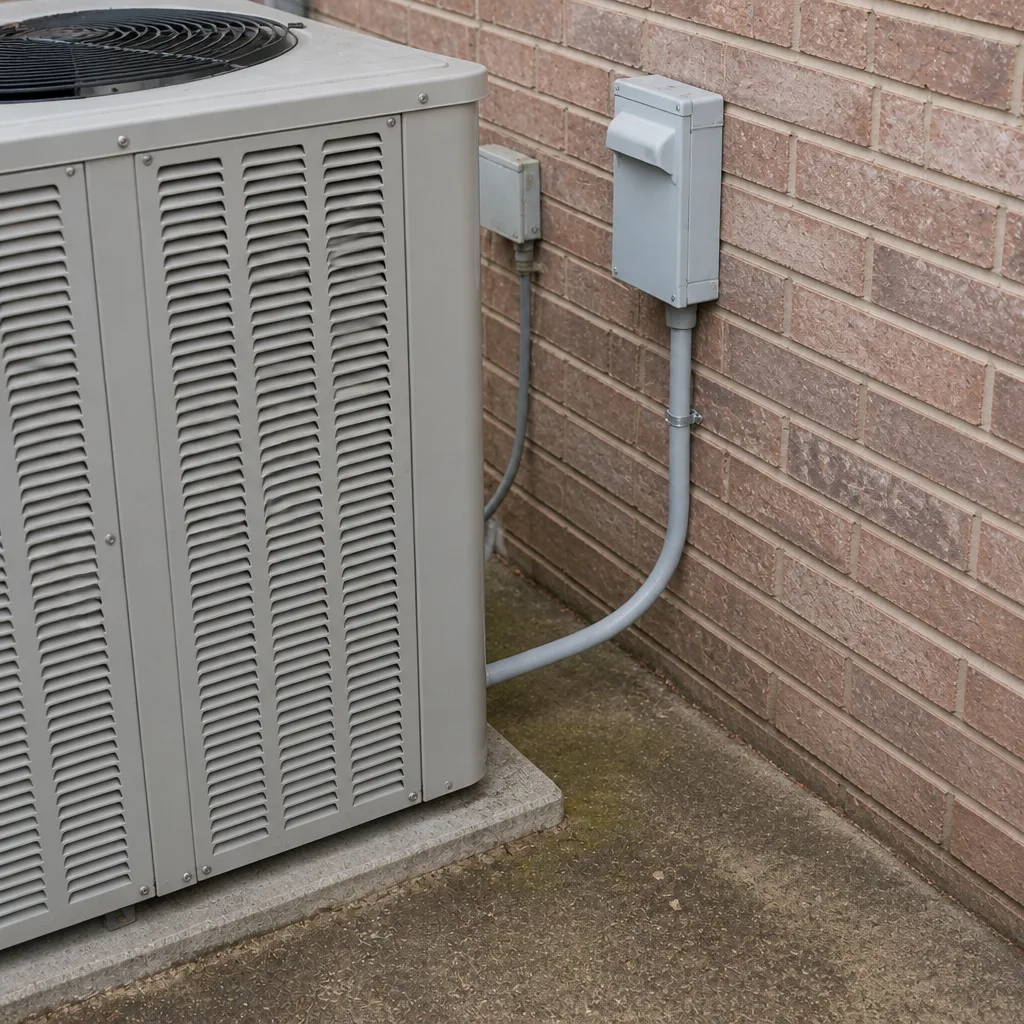
 Before
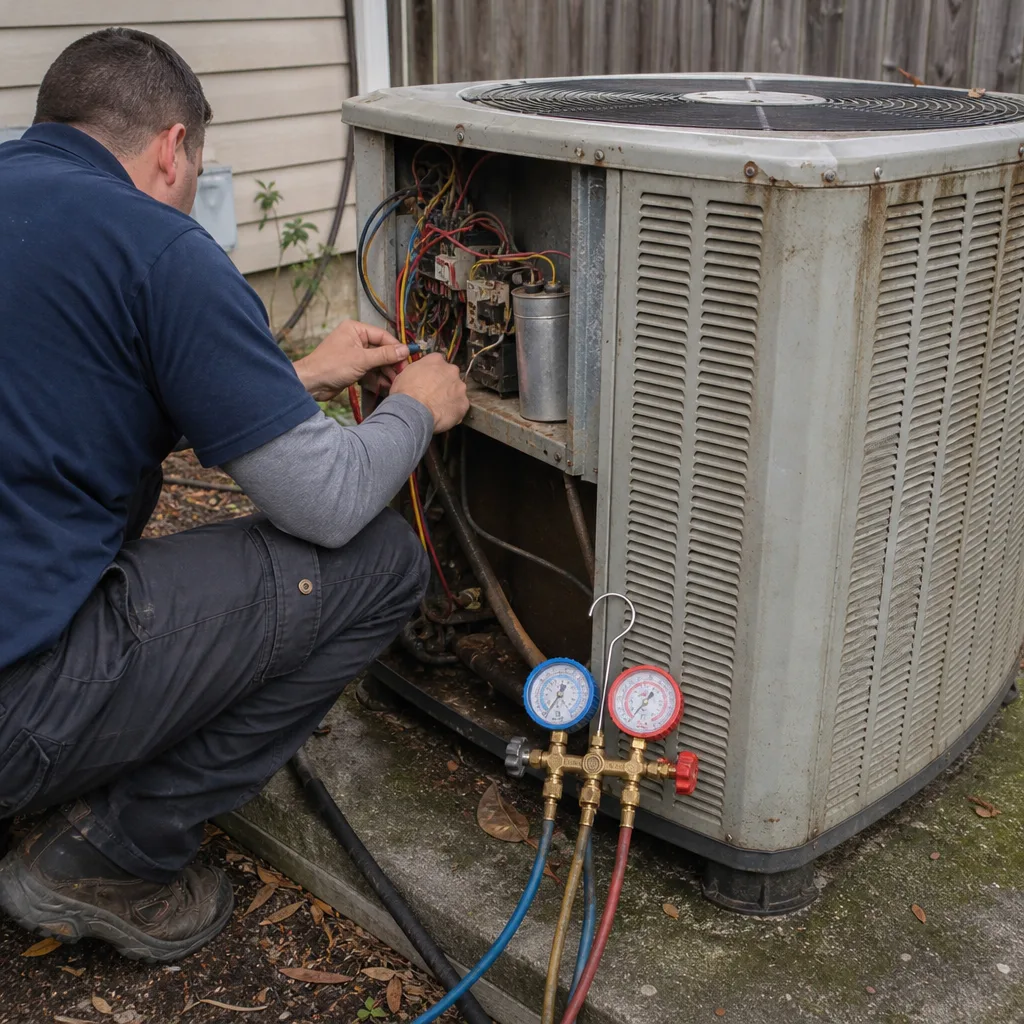
 After
 Before
 After
When to Call a Professional
Brand decisions are rarely urgent, but the failures that force them often are. Call when your system has failed in the middle of a Mesquite summer, when a repair quote is high enough that you’re weighing replacement, when your current brand has become hard to source parts for, or when you’re preparing for a replacement and want an honest read on which system type fits your home. Call when a dealer has recommended a brand and you want a second opinion from someone with no stake in that recommendation. Another reason: any work involving electrical panel capacity, gas line connections, or refrigerant handling is not a homeowner task. Those need a trained professional, and we’ll say so plainly.
Whitman AC Repair offers free estimates in Mesquite – call (866) 964-4152. We answer 24/7. Fast dispatch from 7am to 7pm, Sunday through Friday.
Frequently Asked Questions
There isn’t a single best brand, because the right choice depends on system type, ductwork, and parts availability in this market. Carrier, Trane, Lennox, Goodman, Rheem, York, Daikin, Bryant, and American Standard all build quality equipment suited to Mesquite’s climate, and any of them can be a strong choice if the install is right. The brand that’s “best” is the one matched to your load calculation and serviceable by someone local. Call (866) 964-4152 for a free estimate if you’d like an equipment-agnostic recommendation.
Not always. The cooling season here is long enough that efficiency pays back more than in milder climates, but the highest tier usually costs more than it returns unless the ductwork is already tight and the install is done carefully. A strong mid-to-high efficiency system installed well typically gives better return than a premium system installed poorly. Call (866) 964-4152 for a free estimate that includes the load calculation and the real operating cost comparison.
Yes, if the equipment is working and parts are accessible locally. Brand switching should be driven by equipment condition, not brand familiarity. A less-marketed system that’s serviceable by a technician who knows the platform is often a better investment than replacing it. Get a repair quote before you get a replacement quote. Call (866) 964-4152 – we service nine major brands and can tell you honestly whether your current system is worth keeping.
Their recommendation is honest to their business model, but it’s not a comparison. A dealer who only installs one line will recommend that line because that’s the equipment they know, stock, and sell. If you want a brand-neutral view, ask a contractor who services many brands – that’s a structural difference, not a sales pitch. We work on nine brands and don’t have a preferred line. Call (866) 964-4152 for a free estimate.
Ask the contractor directly whether common parts – blower motors, ignitors, control boards, capacitors – are on local distributor shelves or need special ordering. In the Dallas-Fort Worth area, the nine national brands all have solid local distribution. Regional or budget-direct brands vary, and some parts can be a week out or discontinued. That’s a bigger deal in a Mesquite summer than any spec sheet advantage. Call (866) 964-4152 for a free estimate.
Both work well here. If you have gas service and existing gas ductwork, a gas split is usually the lowest-friction replacement. If you don’t have gas or want one system that heats and cools, a heat pump is a strong fit for North Texas winters. The right answer depends on your fuel access and panel capacity, and that should be settled before brand selection begins. Call (866) 964-4152 for a free estimate tailored to your home.
The Bottom Line
HVAC brand choice belongs at the end of the process, not the beginning. Start with a load calculation, identify whether your home needs a gas split, heat pump, or packaged system, check local parts and technician availability for that class of equipment, and get an honest comparison from someone who works on multiple brands. The name on the cabinet matters far less than whether the equipment is sized correctly, installed well, and serviceable in Mesquite when something fails. Every major brand we name – Carrier, Trane, Lennox, Goodman, Rheem, York, Daikin, Bryant, and American Standard – can deliver a good outcome if those things are right. AMesquite homeowner’s best decision is often to get an impartial read before committing to any brand, and to keep the working system they already have if it’s honest-to-repair rather than replace.
If you’d like a straight assessment of your current system or help choosing what fits your home, call Whitman AC Repair at (866) 964-4152 for a free estimate. We work on nine major brands, we cover AC repair and AC installation plus furnace repair, and we’ll tell you honestly whether repair or replacement makes sense – without a dealer’s stake in the answer. We answer 24/7. Fast dispatch from 7am to 7pm, Sunday through Friday.
Written by the team at Whitman AC Repair.