
Last updated November 15, 2026
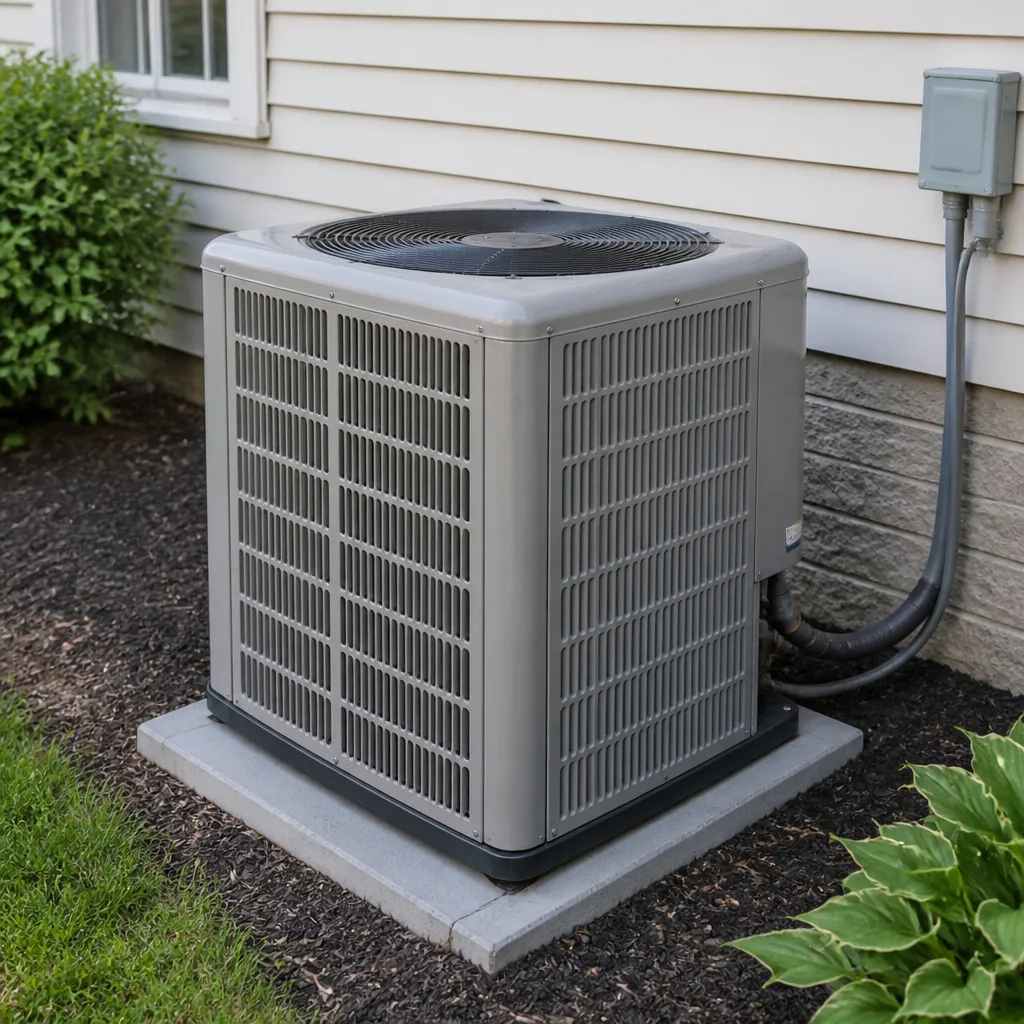 AC repair
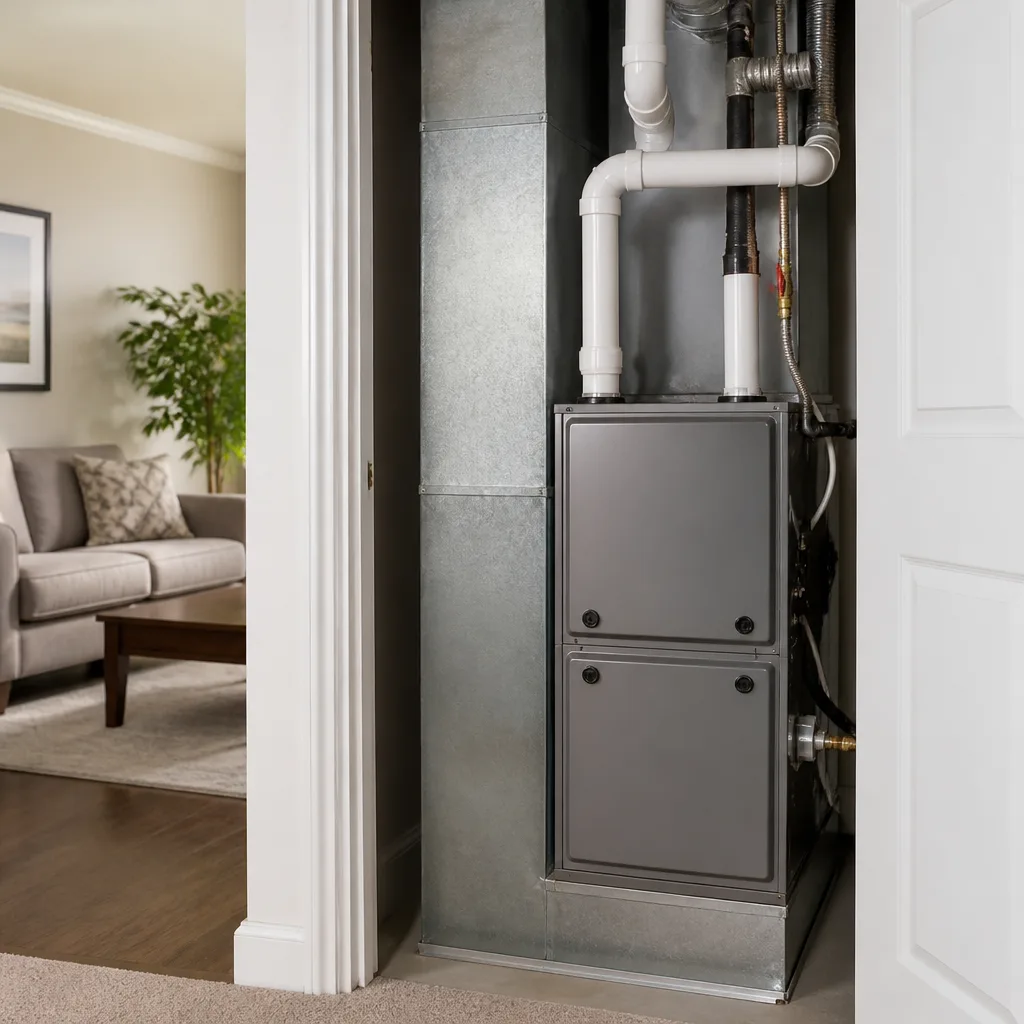 Furnace & heating
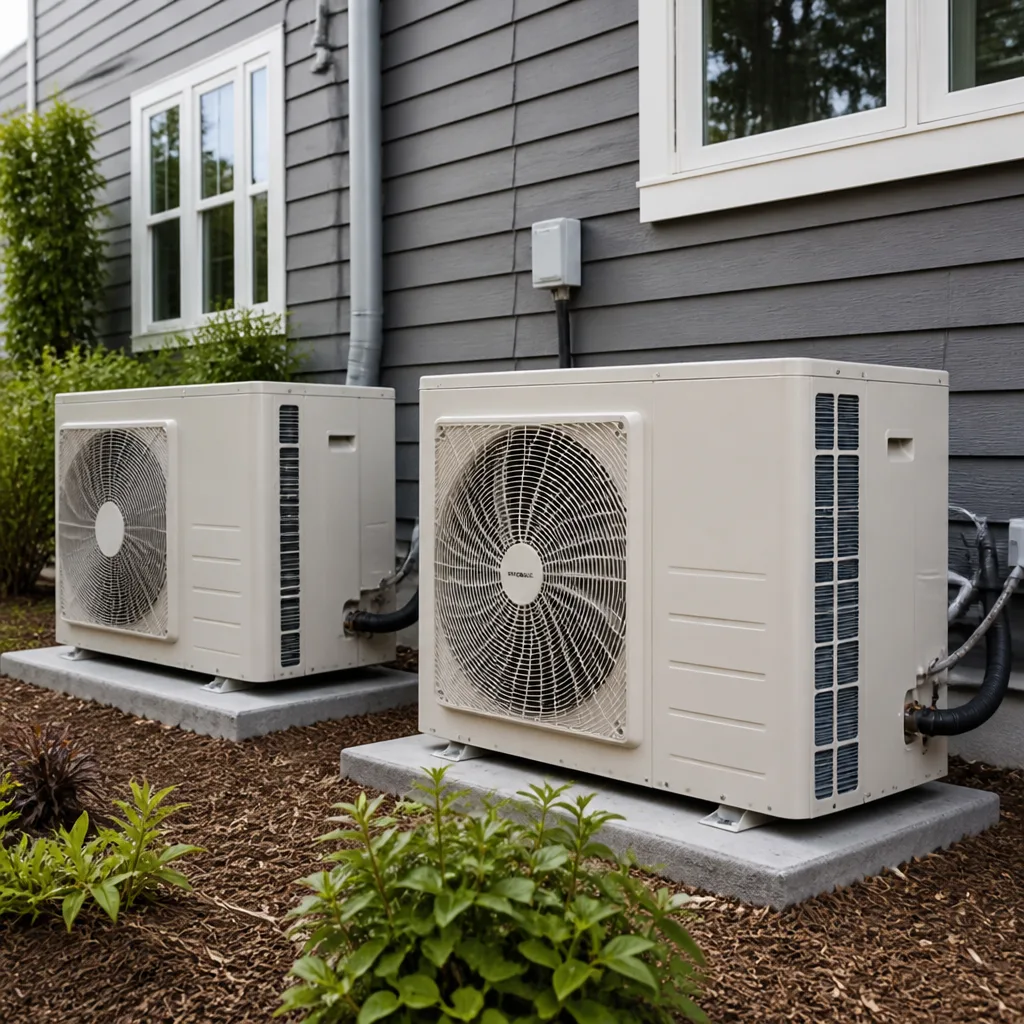 Heat pumps
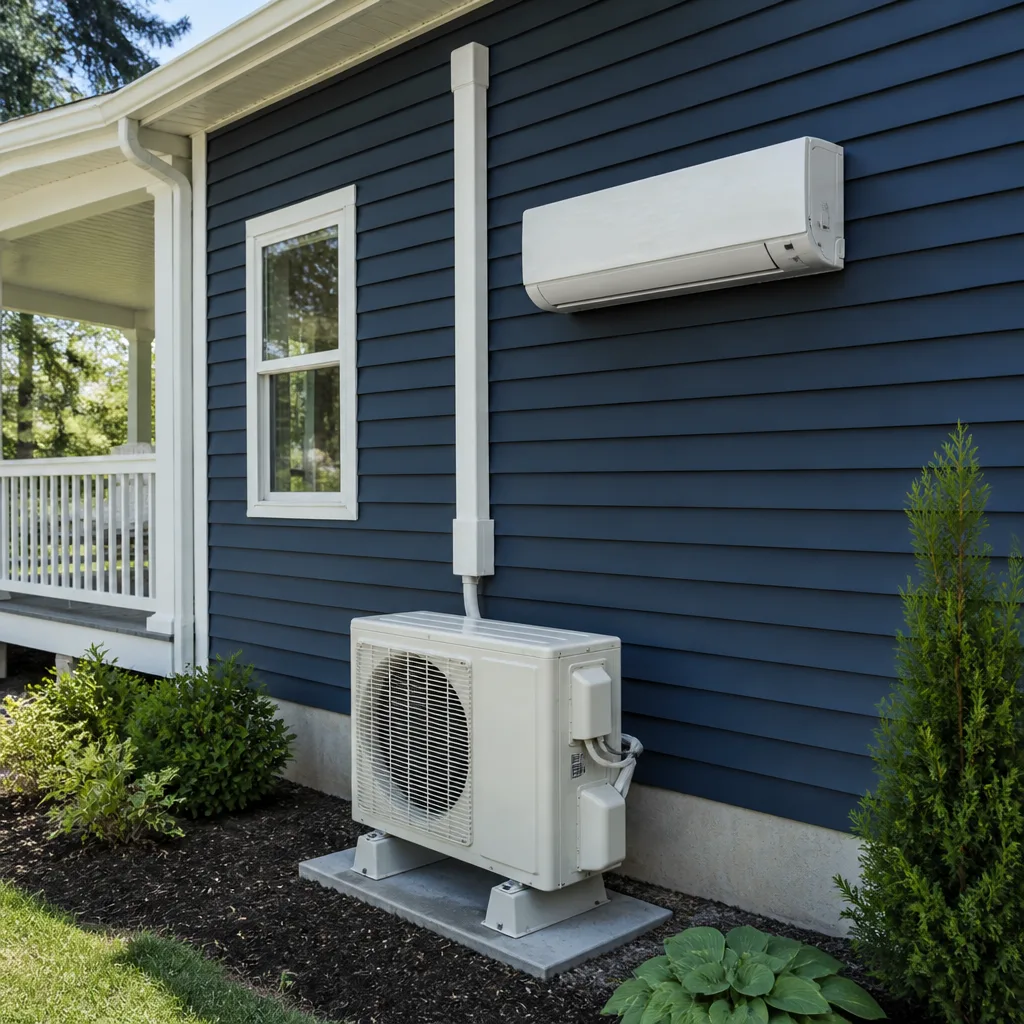 Ductless mini splits
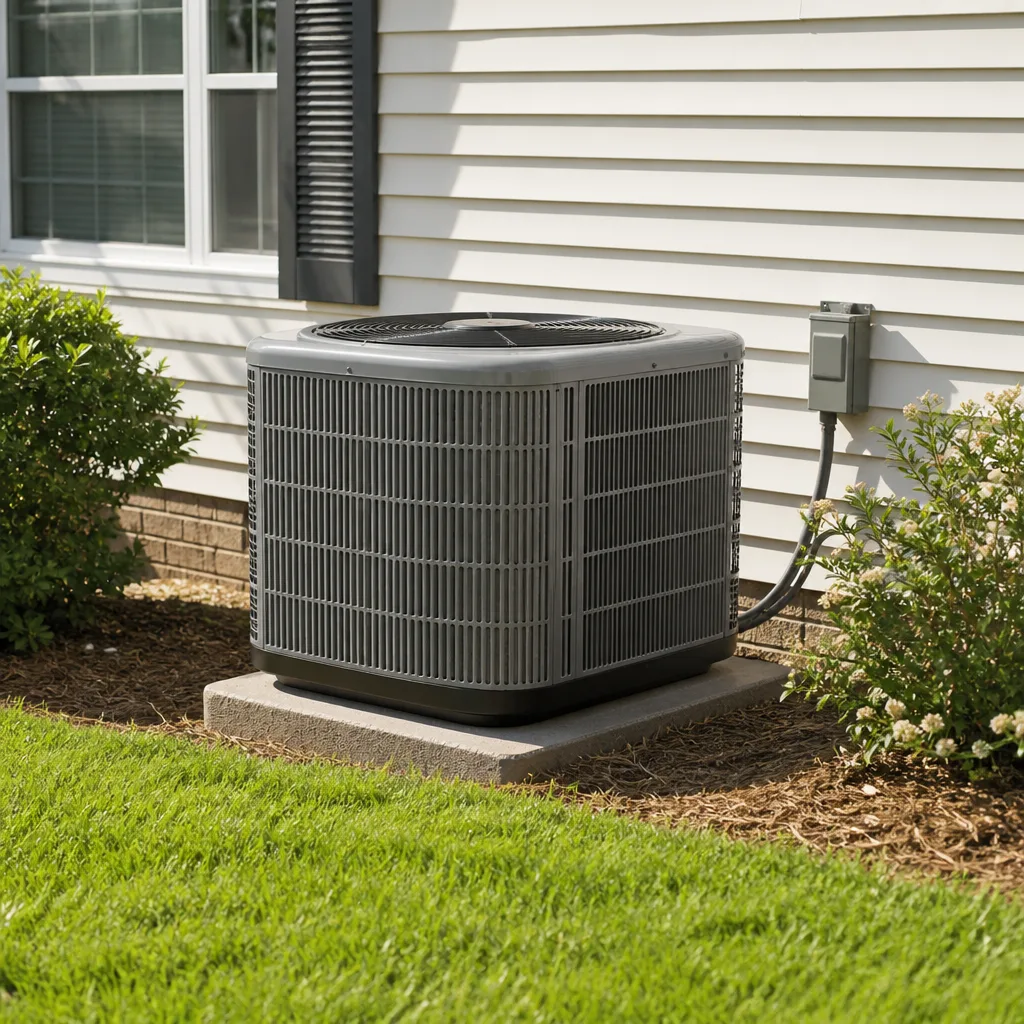 Carrier
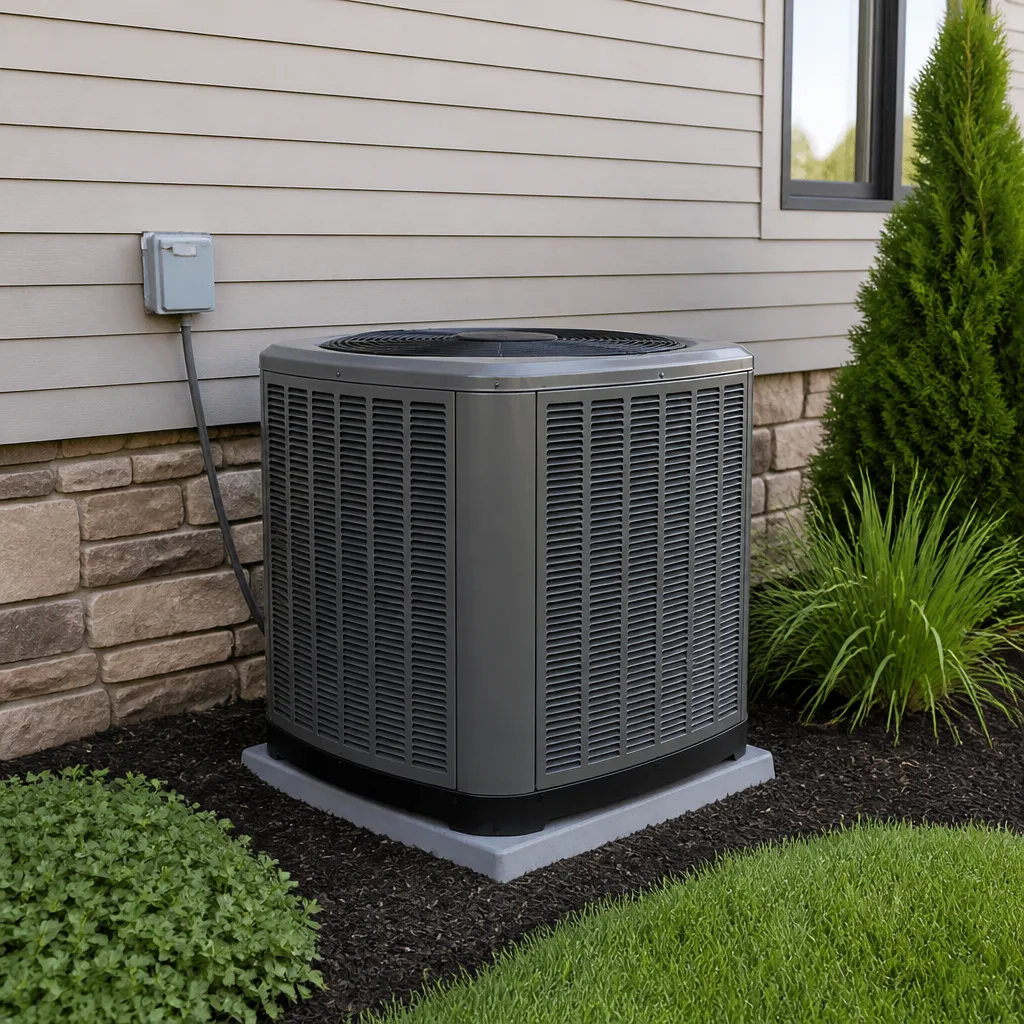 Trane
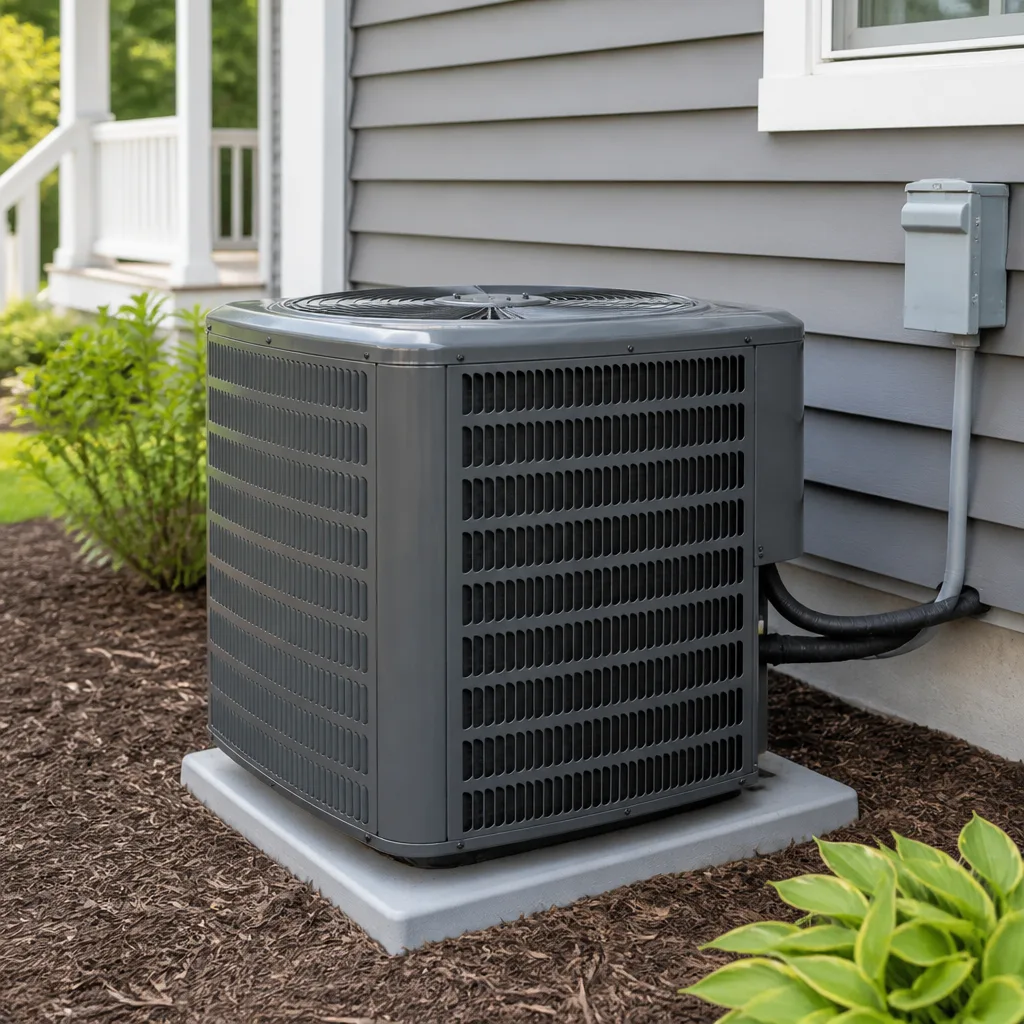 Goodman
Seasonal tune-up and full diagnostic on your Carrier, Trane, or Goodman system - readings shown to you before any repair is proposed
Diagnosis first, numbers second - you approve the repair price before a single part goes in.
Get your free estimateDIY vs Professional HVAC: The Mesquite Homeowner’s Decision Guide
Most advice about fixing your own air conditioner starts in the wrong place. It asks whether you’re handy enough, as if skill were the only variable. In Mesquite, the bigger issue is legal exposure. Several HVAC tasks are restricted by federal or state rules no matter how competent you are with a multimeter, and a DIY repair that ignores those lines can void your manufacturer warranty or leave your homeowner policy unwilling to cover the resulting damage. This guide draws the legal boundary first, then walks through the skill question, the tasks that are genuinely worth doing yourself in Mesquite’s climate, and the ones that only look simple.
Quick Answer
In Mesquite, you can legally replace a capacitor, swap a contactor, clean a condenser coil, change filters, and clear a condensate drain on your own equipment. You cannot legally handle refrigerant without EPA Section 608 certification, and most manufacturers require licensed installation to keep the warranty intact. The smart rule is simple: low-voltage parts and cleaning are fair game, anything involving refrigerant, the compressor, or a new install goes to a licensed technician. When a DIY repair risks a warranty claim on a system six months old, the savings rarely hold.
Styles & brands we work with
- AC repair
- Furnace & heating
- Heat pumps
- Ductless mini splits
- Carrier
- Trane
- Goodman
Table of Contents
- Where the Legal Line Actually Falls in Texas
- How DIY Repairs Void Manufacturer Warranties
- The DIY Tasks That Genuinely Pay Off in Mesquite
- Tasks That Look Simple and Aren’t
- Why Multi-Brand Systems Complicate DIY
- The Cost-Benefit Reality Check in a Mesquite Summer
- When to Call a Professional
- Frequently Asked Questions
Where the Legal Line Actually Falls in Texas
The legal boundary in Texas is drawn around refrigerant, not around the whole system. You can legally work on the electrical side of your own air conditioner – capacitors, contactors, fan motors, thermostats – because those are ordinary electrical components. The moment a repair requires adding, recovering, or handling refrigerant, federal law under Section 608 of the Clean Air Act requires an EPA-certified technician. That certification isn’t a nice-to-have; handling refrigerant without it is a violation, full stop. Most DIY tutorials on YouTube stop just short of that line, and that’s exactly where a homeowner can get themselves into trouble.
Texas doesn’t license HVAC contractors at the state level the way it licenses electricians or plumbers. Instead, most municipalities set their own permit requirements for new installations and major changeouts, and the refrigerant rule applies everywhere regardless. If you’re adding a new condenser, replacing a compressor, or altering the refrigerant circuit, call your city’s building department and ask what permits apply, and call a licensed technician to do the work. If you’re swapping a $30 capacitor or rinsing a coil, you’re on the right side of the line.
One more piece of the legal picture: manufacturer warranties. They aren’t law, but they’re enforceable contracts, and they routinely require licensed installation and sometimes licensed repair to stay valid. We’ll cover that next.
The quick legal test
- Does the job touch refrigerant? If yes, you need an EPA-certified technician. No exceptions.
- Does the job involve the compressor, the refrigerant lines, or a full system changeout? Same answer.
- Does the job involve only low-voltage electrical parts or cleaning? You’re likely within your rights.
- Does the job require a permit in your city? Ask the building department before you touch anything.
If you’re unsure which side of the line a job falls on, a free estimate from AC repair clears it up before you spend money on parts. Call (866) 964-4152. We answer 24/7. Fast dispatch from 7am to 7pm, Sunday through Friday.
How DIY Repairs Void Manufacturer Warranties
A manufacturer warranty is a contract, and modern HVAC equipment tracks more of what happens to it than older systems did. Newer units from Carrier, Trane, Lennox, York, Daikin, Bryant, and American Standard routinely log fault codes, compressor runtime, and refrigerant pressure history through onboard diagnostics. When a warranty claim comes in on a system still under coverage, the manufacturer’s service network can pull that data and see whether the failure pattern matches a bad install, an undocumented repair, or a homeowner-fiddled component. In our experience, that paper trail matters more on equipment from the last several years than on anything built a decade ago.
The warranty risk isn’t uniform across every repair. Here’s how it breaks down by task:
- Filter changes and coil cleaning: No warranty risk. These are maintenance, not repair, and every manufacturer expects the homeowner to do them.
- Capacitor or contactor swaps: Low risk but not zero. If the replacement part doesn’t match the OEM spec, some manufacturers push back on a subsequent electrical failure.
- Thermostat swaps: Moderate risk. Swapping a communicating thermostat for a standard one can lock out diagnostic features the warranty relies on.
- Fan motor or blower replacement: High risk. Wrong motor specs cause compressor and control board failures that manufacturers refuse to cover when an aftermarket part is on record.
- Anything touching refrigerant or the compressor: Warranty is effectively void the moment an uncertified person does the work.
On a system that’s six months old, the entire warranty picture is worth more than any DIY savings. On a fifteen-year-old system already out of coverage, the calculus flips. The real question isn’t “can I do this?” but “what does this repair cost me if something goes wrong six months from now?”
The DIY Tasks That Genuinely Pay Off in Mesquite
Mesquite’s summers regularly push past 100°F, and the systems that survive that stretch are the ones that get basic maintenance between service calls. These are the jobs worth doing yourself – not because they’re dramatic savings, but because they extend equipment life and are safe with ordinary precautions.
- Change the filter every 30 to 60 days in cooling season. In Mesquite, June through September generates a lot of dust, pollen, and grass clippings that a filter pulls in. A clogged filter is the leading cause of frozen coils and high head pressure. A $15 filter every month is cheaper than any service call.
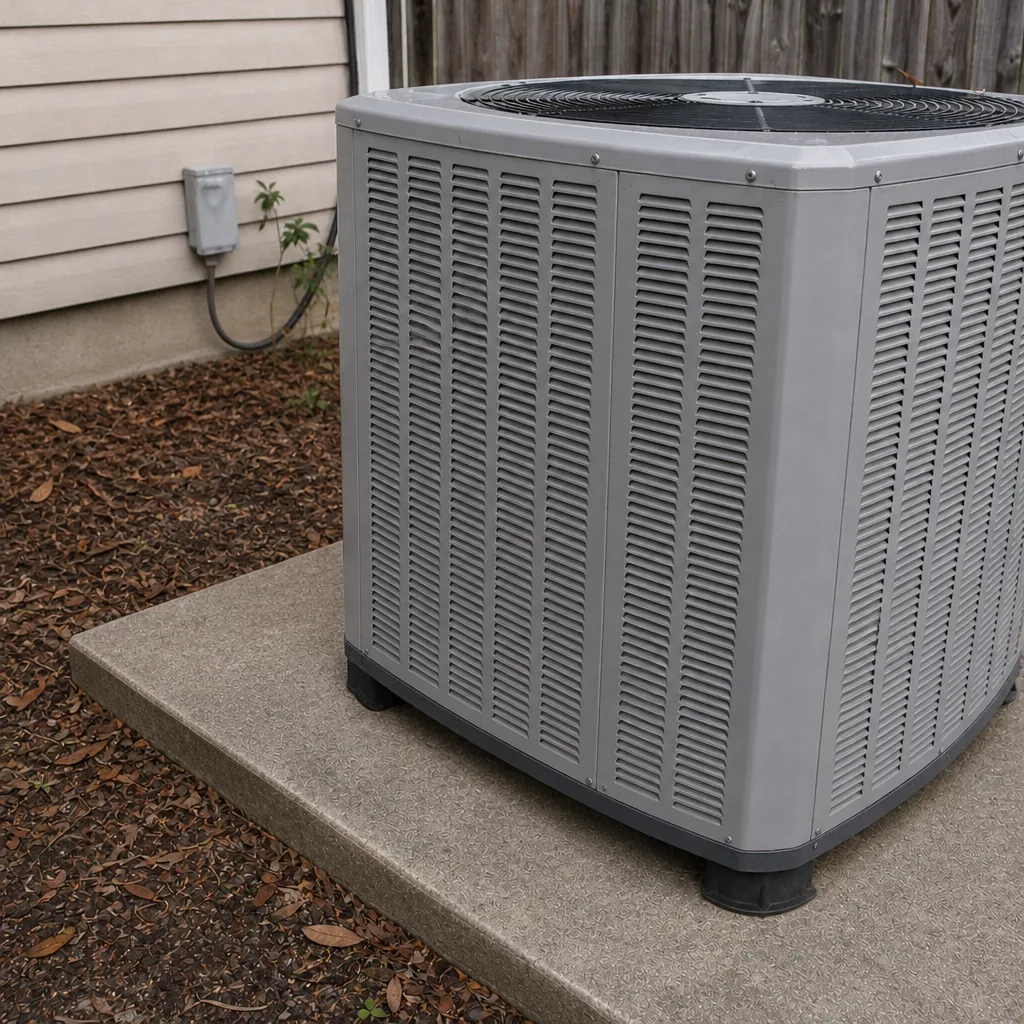
- Rinse the outdoor condenser coil once or twice a season with a garden hose. Turn the system off first, spray from the inside out, and let it dry. Do not use a pressure washer – the fins bend.
- Clear the condensate drain line with a shop vac or a cup of distilled vinegar down the drain pan access annually. A clogged drain in a Texas summer shuts down the system on a float switch within hours of the clog forming, and the fix is $2 of vinegar.
- Keep two feet of clearance around the outdoor unit. Trim shrubs, clear leaves, and don’t stack anything against the cabinet. Restricted airflow reduces efficiency directly.
- Check the thermostat batteries and calibration once a year. A thermostat reading two degrees off will run the compressor longer than the house needs.
These tasks are safe, legal, warranty-friendly, and materially improve how your system performs in a Mesquite July. They also make the system last longer. Most systems that fail early aren’t the ones that got a capacitor replaced by a homeowner – they’re the ones that never got a filter changed.
Tasks That Look Simple and Aren’t
Then there’s the other category: jobs that look approachable on a five-minute video and turn expensive fast. The general pattern is that the harder a component is to reach, the more likely the job hides a complication. Here’s the short list of what to leave alone:
- Anything involving refrigerant. Beyond the legal problem, refrigerant handling requires recovery equipment, a vacuum pump, gauges, and knowledge of superheat and subcooling. A system that’s low on refrigerant has a leak somewhere, and topping it off without finding the leak just delays the failure.
- Adding a hard-start kit. The kits look like plug-and-play, but they only mask a failing compressor. On a York or Daikin system, an aftermarket kit that isn’t matched to the compressor’s spec can shorten its life.
- Replacing the control board. Board pinouts vary wildly between manufacturers, and a wrong board can fry a compressor or a reversing valve. This is where a homeowner who’s comfortable with low-voltage wiring can still lose money.
- Cleaning the indoor evaporator coil. The coil itself is accessible, but the enclosure, insulation, and drain setup around it aren’t designed for homeowner removal. One rip in the duct insulation means a refrigerant-line freeze in August.
- Diagnosing an intermittent fault. A system that works fine in the morning and won’t start at 3pm is telling you something specific, and it’s usually pressure or amperage data that requires instruments.
- Replacing the compressor. Beyond the refrigerant work, the compressor swap involves brazing, evacuation, and weigh-in charging. It’s a full professional job on every brand.
If you’re staring at a symptom that doesn’t match a clean tutorial – grinding, clicking, frozen lines, or a system that keeps tripping the breaker – the right next step is a diagnosis, not parts. Our team handles AC repair in Mesquite across nine major brands, and we’ll tell you honestly whether a repair makes sense or the system is on its way out.
Why Multi-Brand Systems Complicate DIY
Most Mesquite homes run one brand throughout, but plenty of houses end up mixed. A homeowner adds a heat pump addition that goes with a Daikin, keeps the original Bryant air handler in the attic, and mixes in an American Standard compressor when the first one failed. That mix isn’t a problem for a technician who knows all three – but it’s a serious problem for DIY.
Here’s why. A component that’s drop-in compatible on one manufacturer’s equipment can trigger a control board conflict on a mixed system. Thermostats are the classic example: a communicating thermostat designed for Carrier Infinity equipment will not talk to a standard 24-volt Bryant control board without an adapter, and the wrong pairing can lock the system into a single stage or drop the fan to low. Capacitors swap cleanly across most brands because they’re generic electrical parts. Control boards, blower motors, and thermostats almost never do. The only safe way to size the right part is to know exactly which system is which, which most homeowners can’t confirm without opening panels and reading model plates.
We work with all nine major manufacturers – Carrier, Trane, Lennox, Goodman, Rheem, York, Daikin, Bryant, and American Standard – so we don’t have to guess which parts are compatible with which system. If your home is a mixed-brand setup, that’s the reason to call rather than order a part. Call (866) 964-4152 for a free estimate – the diagnosis saves you the cost of a wrong part.
The Cost-Benefit Reality Check in a Mesquite Summer
Every DIY decision comes down to expected savings versus expected downside. The savings side is straightforward: a capacitor costs $20 to $40 online, and having one installed costs meaningfully more once you add the diagnostic visit and labor. The downside side is where most homeowners miscalculate, especially in a Mesquite summer.
Here’s what a failed capacitor actually does in mid-July. The compressor stalls, the indoor fan may or may not run, and the house gains two to five degrees per hour depending on sun exposure. If the homeowner’s replacement part was the wrong microfarad rating, the compressor can start but run hot, and it may fail outright within a week. If the fix doesn’t hold through a 100°F week, the homeowner is now paying for an emergency diagnostic on top of the original part cost, plus the cost of the correct part, plus – often – a repaired compressor that could have been avoided. The “savings” evaporate the moment the system stops cooling on a Sunday afternoon with an infant in the house.
Compare that with the same job done right the first time. A technician diagnoses the failure, identifies whether the capacitor was actually the problem or a symptom of a hard-starting compressor, replaces the correct part, and verifies the whole system under load. The total is higher than a $40 capacitor, and materially lower than a DIY repair that cascaded. On a system less than five years old, the warranty math alone tends to favor the professional call. On a fifteen-year-old unit out of warranty, a homeowner with real electrical experience and the right meter can usually swap a capacitor safely – as long as they know the failure isn’t something else.
A working cost comparison
- Filter, drain line, coil rinse: DIY wins every time. Roughly $30 in parts and an hour of your afternoon.
- Capacitor on a system under warranty: Professional wins. The part cost is low but the warranty risk dominates.
- Capacitor on an older out-of-warranty system: DIY can win if you match the microfarad rating exactly and know how to discharge the old capacitor safely.
- Contactor, fan motor, thermostat: Professional wins on any communicating system. DIY is fine on basic 24-volt setups.
- Refrigerant, compressor, install, or anything with a permit: Professional only, no DIY option.
See the difference
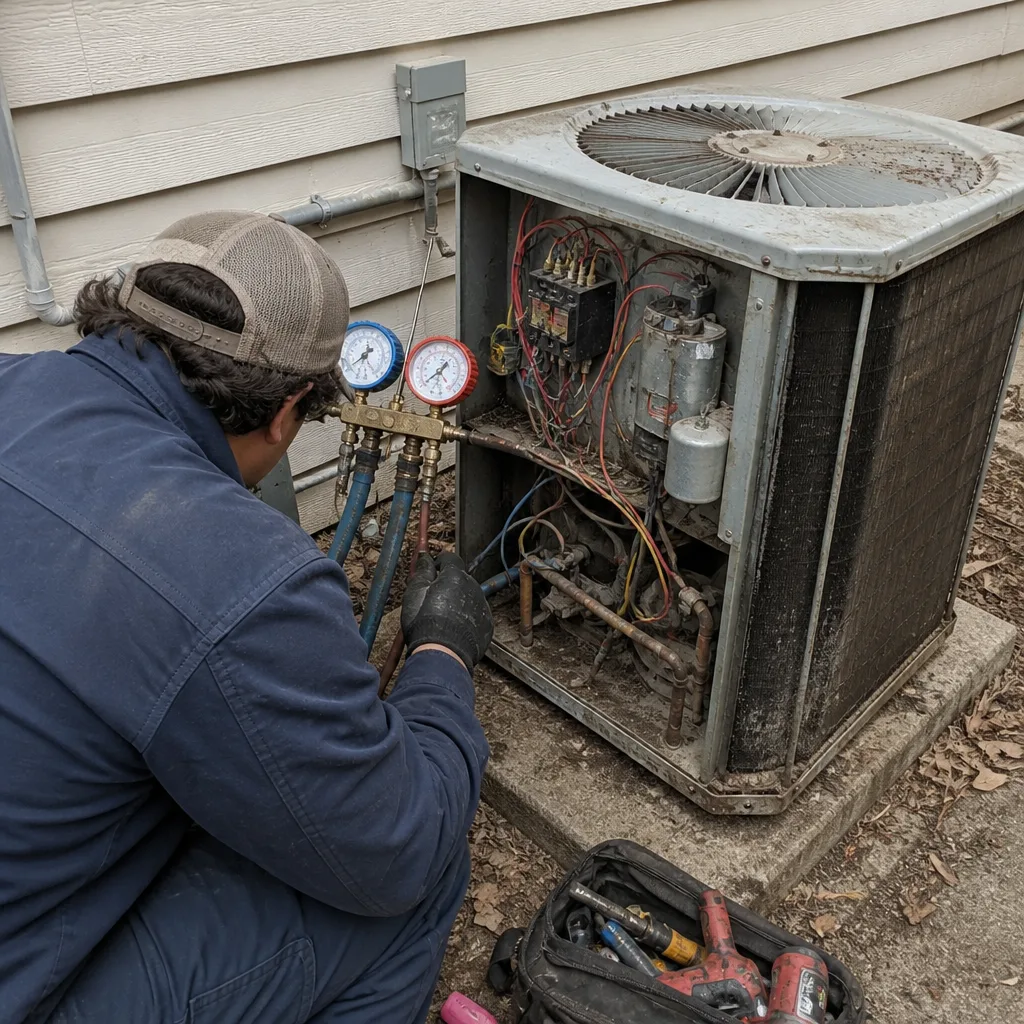 Before
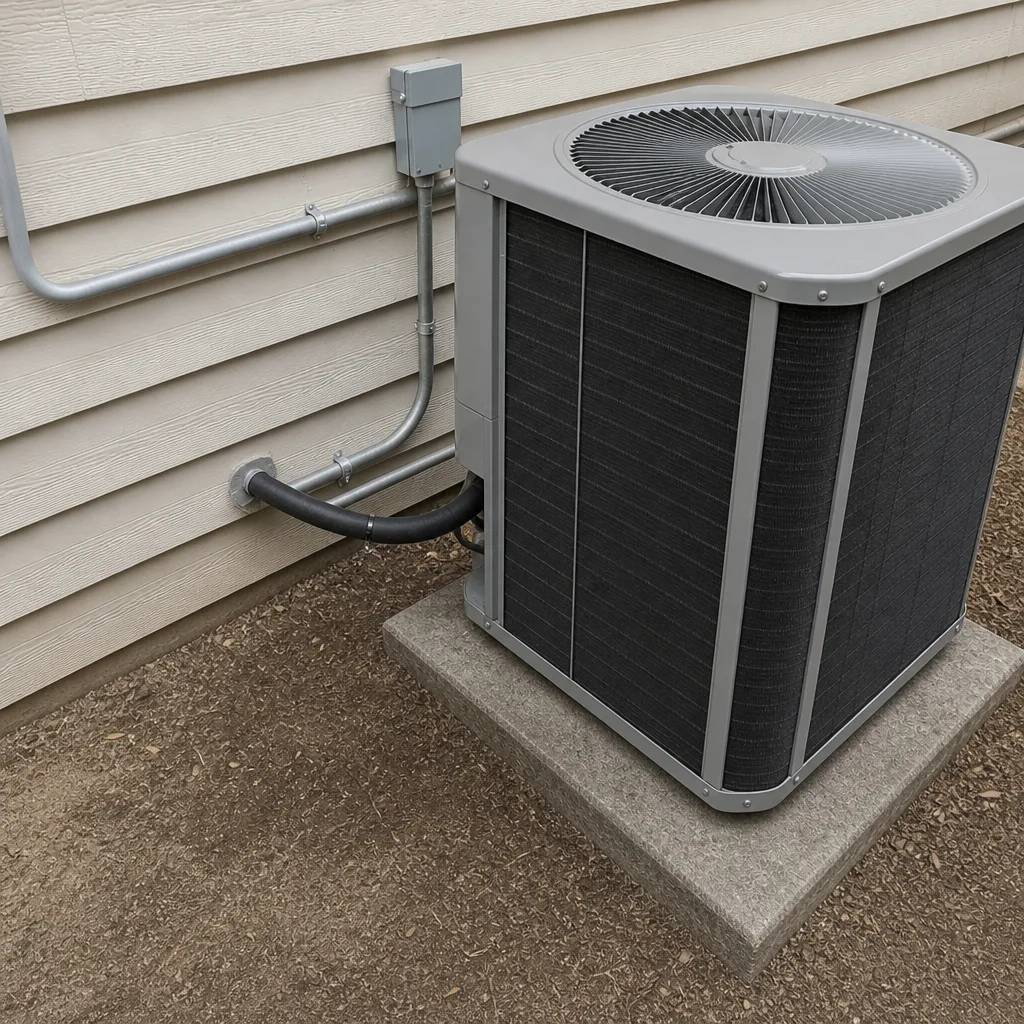 After
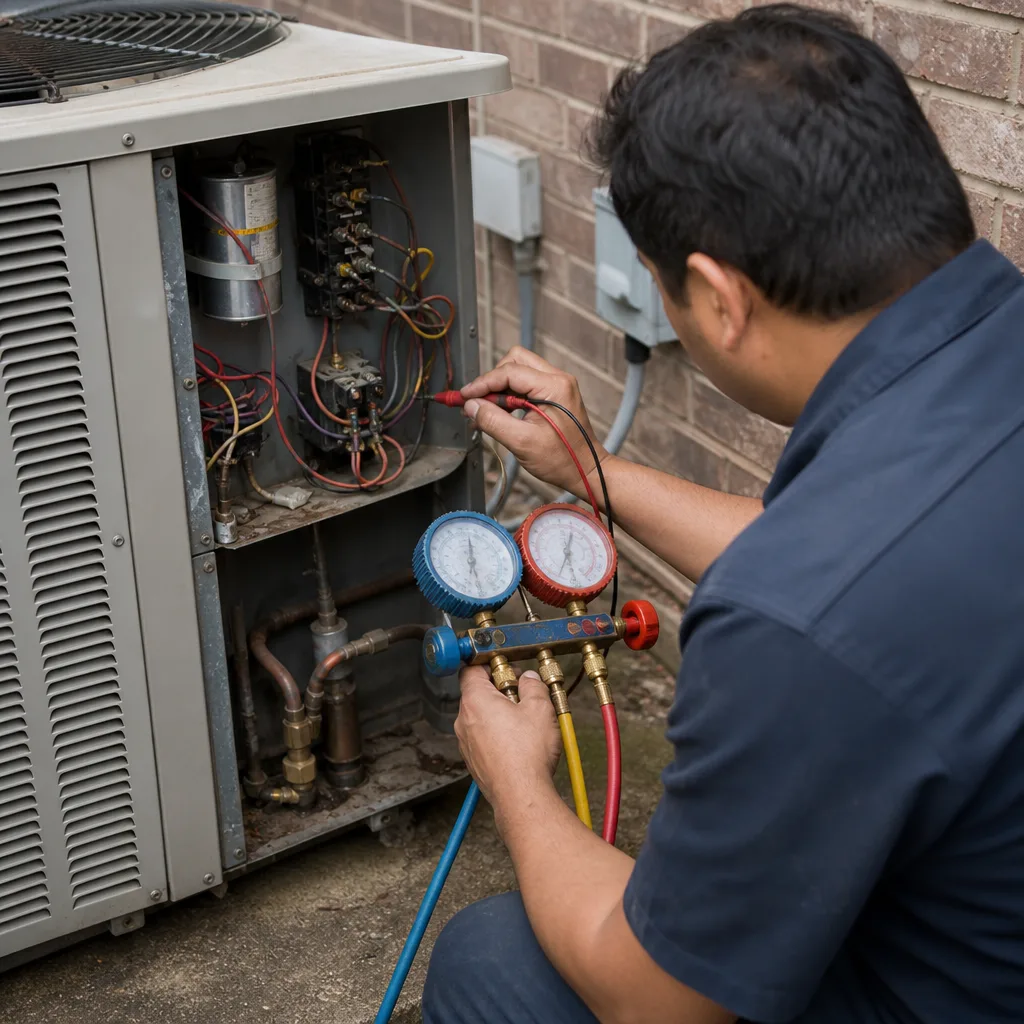 Before
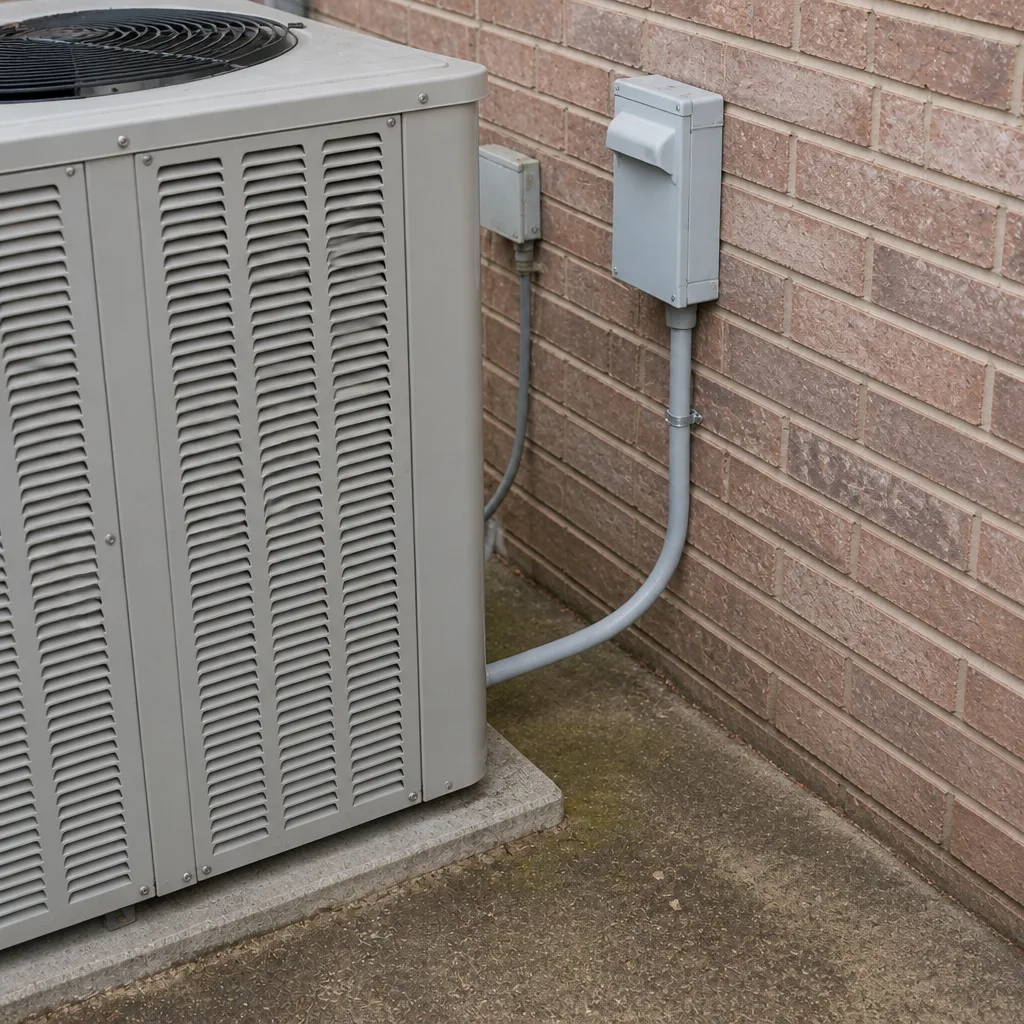 After
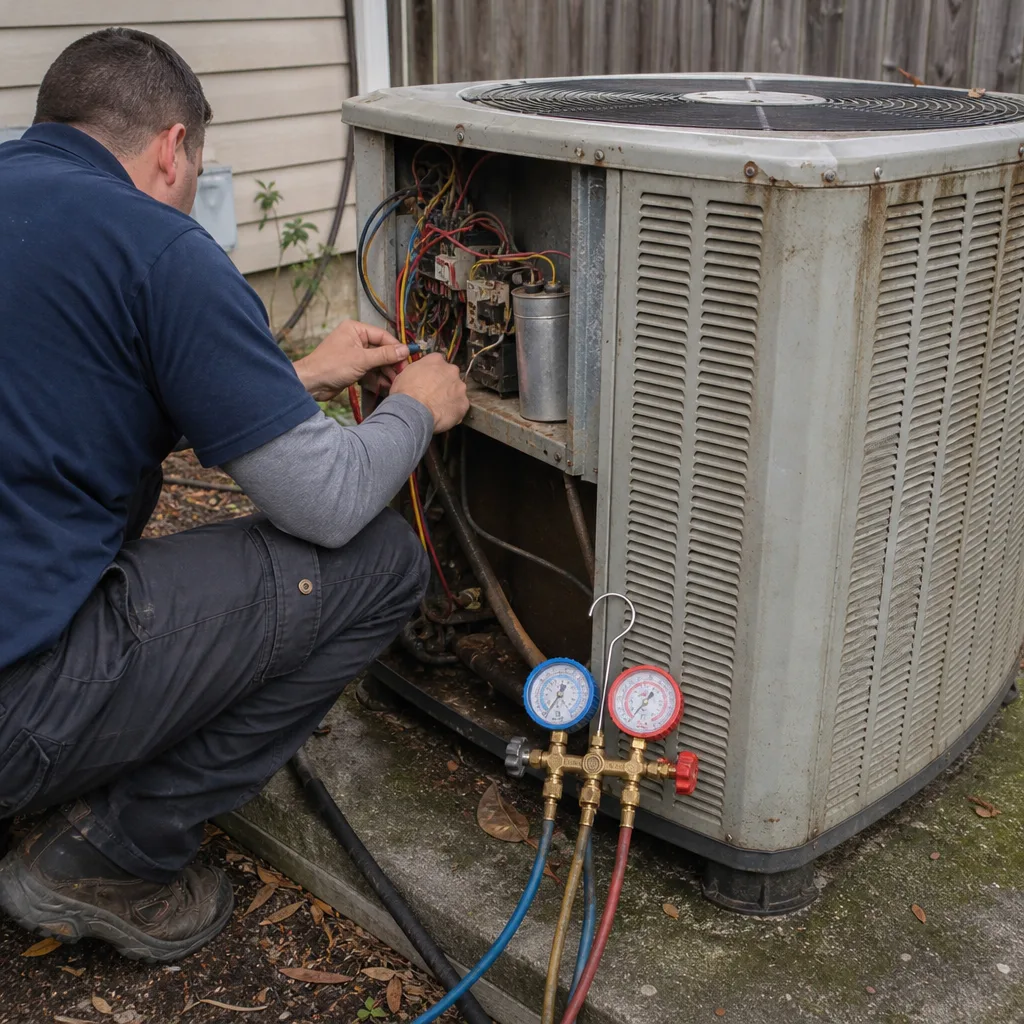 Before
 After
Common Mistakes to Avoid
- Guessing at a capacitor rating. The microfarad rating printed on the old part must match the new one exactly. One number off, and the compressor runs hot until it fails.
- Touching refrigerant without understanding the law. It’s a federal violation, not a gray area. The certification requirement isn’t optional, and no amount of YouTube watching substitutes for the EPA 608 license.
- Using a pressure washer on the condenser coil. The fins are paper-thin aluminum and bend at the first strong spray. Garden hose only, sprayed from the inside out.
- Replacing a thermostat without checking compatibility. A standard thermostat on a communicating Carrier or American Standard system can lock out staging or diagnostics. Check the install manual before swapping anything.
- Ignoring the first “won’t start” symptom. In a Mesquite heat wave, a system that trips the breaker once will trip it again within days. A $180 diagnostic beats a $2,400 compressor replacement every time.
- Skipping the permit. Most Mesquite system changeouts require a mechanical permit, and skipping it can create a resale problem years later. Ask the building department before an install, not after.
- Letting the filter go months in peak season. Filters in Mesquite fill faster than the “30-day” label suggests during cottonwood and dust season. Check monthly from June through September.
When to Call a Professional
Some situations aren’t close calls. Call a professional the moment refrigerant touches the conversation, and call immediately for any compressor, reversing valve, or control board work. Call if the system is under warranty and hasn’t yet been repaired by anyone else – a DIY repair can void coverage you paid for. Call if the system is tripping breakers, blowing warm air after a fresh filter, or making noises that don’t belong (grinding, clicking, or a rattle that changes with fan speed). Call if your home has mixed-brand equipment and you aren’t sure what’s actually installed. And call before you buy any part above $75, because a wrong part is money gone.
Whitman AC Repair offers free estimates in Mesquite – call (866) 964-4152. We answer 24/7. Fast dispatch from 7am to 7pm, Sunday through Friday. Our technicians have up to 8 years of experience and work on all nine major brands, so we don’t turn away a system because it isn’t the manufacturer we install most often. We also cover AC installation and furnace repair, so a single call handles both the AC and the heat that shares the same ductwork. For questions about scheduling in Mesquite, the same number works.
Frequently Asked Questions
Yes, for low-voltage electrical work and cleaning, but not for anything involving refrigerant. You can legally replace a capacitor, contactor, fan motor, or thermostat on your own system, and you can clean coils and clear drains. Federal law under Section 608 requires EPA certification for any refrigerant handling, and that line applies everywhere in Texas regardless of skill. If the job requires adding or recovering refrigerant, you need a certified technician.
It can, especially on newer equipment that logs diagnostic data. Manufacturer warranties typically require licensed installation, and most will push back on a claim when an aftermarket part or unverified repair shows up in the system history. Simple maintenance like filter changes and coil cleaning never voids a warranty. Component swaps on a system still under coverage carry real risk, and the safest path is a licensed technician on anything electrical beyond a filter.
Simple maintenance saves the most per dollar spent: a $15 filter and a $2 bottle of vinegar prevent the two most common service calls entirely. On a capacitor or contactor, the DIY savings can be meaningful if the system is out of warranty and you’ve matched the part correctly. On anything above $75 in parts, or on a communicating system, the potential downside usually outweighs the savings once you account for the cost of a cascaded failure in a 100°F Mesquite week.
Using the wrong capacitor rating or a mismatched thermostat. Both look like straightforward replacements, and both can cause the compressor to run hot or the system to lose staging. In our experience, a wrong part is the single most common reason a homeowner ends up calling a professional after starting a repair, and it usually costs more than the original service call would have. Call (866) 964-4152 for an exact quote before buying parts – estimates are free.
Only for parts that are truly generic across brands, like filters and capacitors. Mixed-brand systems are the situation where DIY most often goes wrong because control boards, blower motors, and thermostats aren’t interchangeable across manufacturers without confirmation. The right move on a mixed system is a professional diagnosis so the part matches the equipment it’s actually serving. We work with both York and American Standard, so we don’t have to guess at compatibility.
Check the filter and the outdoor unit first. A clogged filter or a condenser that’s buried under leaves accounts for a large share of mid-summer service calls, and both are safe to fix yourself. If the filter is clean, the outdoor fan is spinning, and the air is still warm, the problem is upstream of the basics and you need a diagnosis. Call (866) 964-4152 – we answer 24/7, and fast dispatch runs from 7am to 7pm, Sunday through Friday.
The Bottom Line
The real question in Mesquite isn’t whether you’re handy enough to fix your own AC – most homeowners are. It’s whether the repair sits on the right side of the legal line, and whether the warranty and insurance math works out if something goes wrong. Low-voltage parts, filters, coil cleaning, and drain clearing are yours to do legally and safely. Refrigerant, compressors, control boards, and full installs belong to licensed technicians. Mixed-brand systems tilt the decision toward professional diagnosis almost every time, because compatibility isn’t guessable from a parts site. And in a 100°F Mesquite week, a DIY fix that doesn’t hold is more expensive than the professional repair that would have.
If you’re on the fence, use this guide as your test. Filter and coil care: do it yourself. Anything that touches refrigerant or the compressor: call us. When in doubt about a $75+ part or a mixed-brand setup, the free estimate is the cheapest money you’ll spend. Call (866) 964-4152. We answer 24/7. Fast dispatch from 7am to 7pm, Sunday through Friday. One call covers your AC and your furnace, across all nine major brands, with no manufacturer kickbacks and no brand bias – just the right fix for the system you already own.
Written by the team at Whitman AC Repair.