
Last updated November 15, 2026
 AC repair
 Furnace & heating
 Heat pumps
 Ductless mini splits
 Carrier
 Trane
 Goodman
Seasonal tune-up and full diagnostic on your Carrier, Trane, or Goodman system - readings shown to you before any repair is proposed
Diagnosis first, numbers second - you approve the repair price before a single part goes in.
Get your free estimateAC Repair Maintenance Checklist for Mesquite Homeowners
Ask most homeowners what AC maintenance means and they’ll say “change the filter.” That’s not wrong, but it’s also not the task that takes systems down here. In our experience across Mesquite, the number one skipped maintenance item is clearing the condensate drain before June. A single clog during a 100°F week can shut a system down faster than any mechanical failure, and it’s the kind of failure that announces itself at the worst possible moment. This guide sequences maintenance by how often things actually fail in Mesquite’s heat, humidity, and dust, not by alphabetical convenience. You’ll learn what to check, when, and when to call.
Quick Answer
An effective AC maintenance checklist for a Mesquite home covers five things in this order: clear the condensate drain in late spring before the first 100°F stretch, clean the outdoor condenser coil after cottonwood season and again after construction dust peaks, test the capacitor and contactor annually before the heavy-load months, check refrigerant and electrical connections at the start of each cooling season, and inspect the drain pan and any humidifier components for hard-water scale twice a year. Filters get changed monthly during the long cooling season. Everything else is sequenced around Mesquite’s specific failure patterns, not a generic quarterly schedule.
Styles & brands we work with
- AC repair
- Furnace & heating
- Heat pumps
- Ductless mini splits
- Carrier
- Trane
- Goodman
Table of Contents
- 1. Condensate Drain: The June Task Most Homeowners Skip
- 2. Outdoor Coil Cleaning and Mesquite’s Dust Calendar
- 3. Capacitors and Contactors: Voltage Stress in a Long Cooling Season
- 4. Multi-Brand Systems: Mismatched Maintenance Intervals
- 5. Hard Water and Your Drain Pan and Humidifier
- 6. Filter Strategy for a High-Particulate Climate
- 7. A Month-by-Month Maintenance Calendar for Mesquite
- 8. What You Can Safely Check Yourself
1. Condensate Drain: The June Task Most Homeowners Skip
The condensate drain is the single most neglected component on a Mesquite air conditioner, and it’s also the one whose failure is most disruptive. Here’s why: your AC removes moisture from the air as it cools. That moisture collects on the indoor coil and drips into a drain pan, then exits through a PVC drain line. In Mesquite’s humid season, that drain line carries a surprising volume of water. When it clogs, the water has nowhere to go, and the system either shuts off on a safety switch or overflows into your ceiling, walls, or attic insulation.
The timing matters. Clear the drain before the first sustained 100°F week, which in Mesquite usually means late May or early June. Once the cooling season starts in earnest, the system runs almost continuously, and a drain that was borderline-clogged in April will be fully blocked by July.
How the condensate drain works (and what to check)
- Locate the drain line. It’s usually a white PVC pipe exiting the indoor air handler or evaporator coil, often routed to a floor drain, exterior wall, or condensate pump.
- Look for standing water or algae. A clear drain line should not have visible water pooling in the trap or algae growing inside it.
- Check the float switch. Most modern systems have a float switch in the drain pan that shuts the unit off if water rises. Confirm it’s clean and moves freely.
- Flush the line with water. A gentle flush of clean water through the clean-out port can clear a partial clog early. If it doesn’t flow freely, call a technician rather than forcing it.
- Inspect the drain pan. Look for rust, cracks, or standing water in the pan. A cracked pan means replacing it before it fails.
What we see most often in Mesquite is a drain that hasn’t been touched in two years. The homeowner changed the filter religiously and never knew the drain existed. That’s the gap this checklist exists to close.
2. Outdoor Coil Cleaning and Mesquite’s Dust Calendar
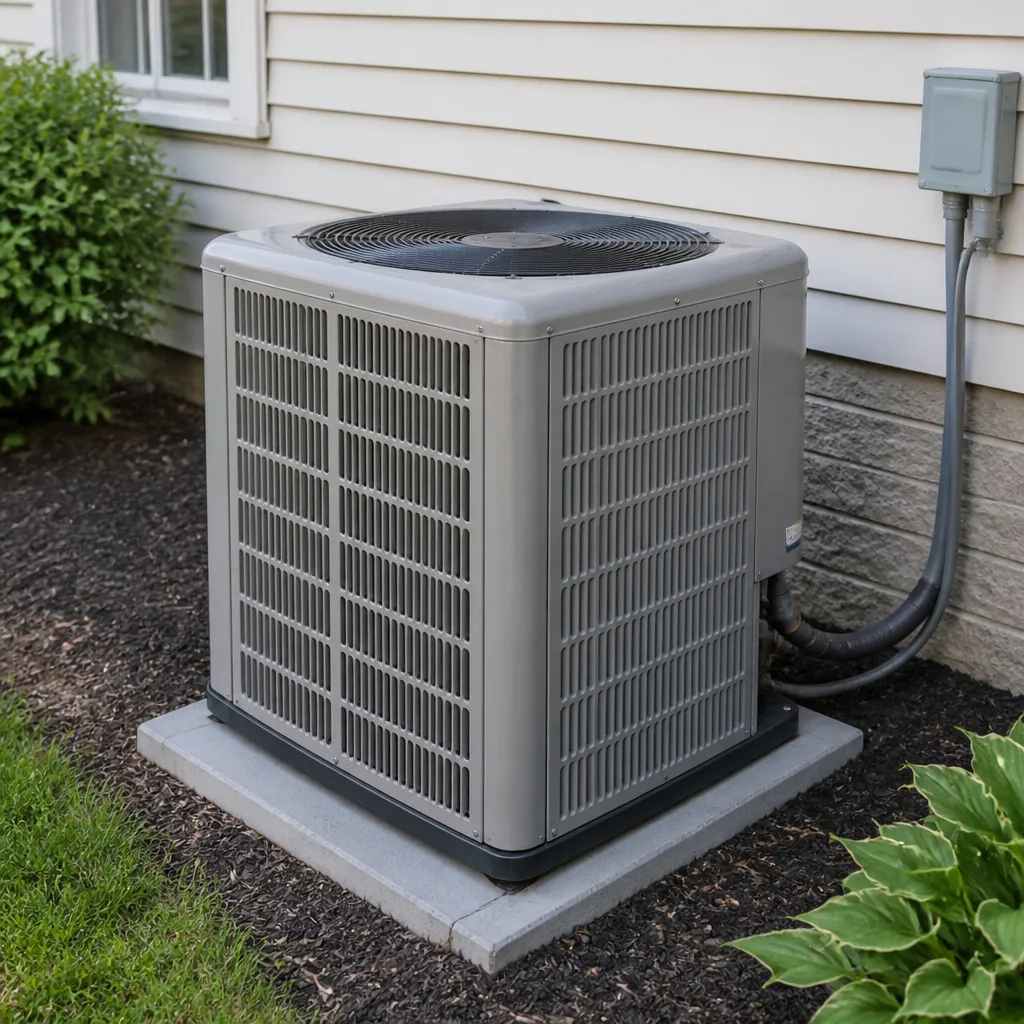
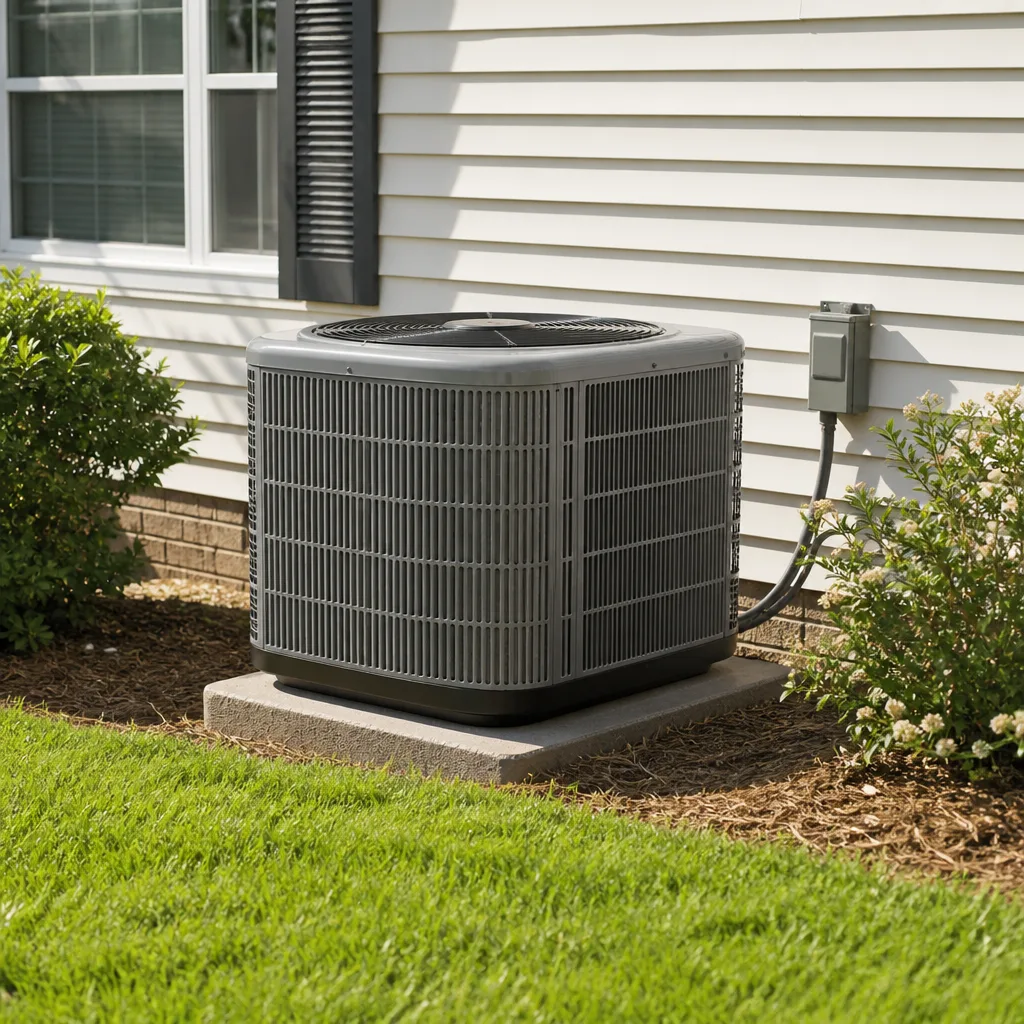
The outdoor condenser coil is where heat leaves your home. It’s a finned coil wrapped around the outside unit, and every bit of dust, pollen, and construction debris that lands on those fins reduces its ability to shed heat. In Mesquite, that dust load is not evenly distributed across the year. It has two peaks.
Two cleaning windows, not one
- Cottonwood season (late spring into early summer): Cottonwood fluff, pollen, and seed material coat the coil quickly. This is the single highest-deposit window for many Mesquite neighborhoods.
- Construction dust (variable, peaking with new development): Mesquite has active residential and commercial construction in multiple areas. When there’s a building site near your home, the dust load on the coil rises noticeably for weeks at a time.
Clean the outdoor coil after cottonwood season and again if construction dust has been heavy nearby. If your unit sits near a busy road or a gravel area, more frequent cleaning is worth the effort.
What “cleaning the coil” means in practice
- Turn the system off at the thermostat and the breaker.
- Remove any debris from around the unit – leaves, grass clippings, cottonwood fluff, and especially anything blocking airflow on all sides.
- Rinse the fins from the inside out with a gentle stream of water. A garden hose on low pressure is enough. Never use a pressure washer on coil fins.
- Inspect for bent fins and straighten with a fin comb if needed.
- Check the fan blades for debris and confirm the fan spins freely by hand while the unit is off.
A dirty condenser coil leads to higher head pressure, longer run times, and more strain on the compressor. It’s also one of the easiest maintenance items to get right. If the coil is badly packed or you’re unsure about the fins, a technician can clean it safely.
3. Capacitors and Contactors: Voltage Stress in a Long Cooling Season
In most of the country, an air conditioner runs for a season. In Mesquite, it often runs for 60-plus consecutive days at high load during peak summer. That kind of continuous duty cycle is genuinely hard on two small electrical components: the capacitor and the contactor. Both fail more often here than their reputation suggests, and both are inexpensive to replace when caught early and disruptive when they fail at the wrong time.
What these components do
The capacitor stores and releases electrical energy to help the compressor and fan motors start and run smoothly. The contactor is a switch that closes to send power to the compressor and condenser fan when the thermostat calls for cooling. Under sustained heat and continuous operation, capacitors weaken and contactors pit and stick.
Inspection cadence in a Mesquite climate
- Once a year, before the heavy-load months. A technician should test the capacitor with a meter against its rated microfarad value and inspect the contactor points for pitting or burning.
- Any time the system struggles to start, hums and shuts off, or the outdoor fan doesn’t spin reliably. These are classical signs of a weak capacitor.
- After any severe heat stretch where the system ran nearly nonstop for weeks. A component that tested fine in May may test weak by August.
This is not a DIY inspection. Capacitors store a dangerous electrical charge even after power is removed, and the electrical panel and contactor carry line voltage. Testing these components requires a trained technician with the right meter and safety procedure. We recommend leaving this one to a professional – it’s genuinely dangerous work for an untrained hand.
When you do call, understand that a technician going through a system while it’s under load is looking for exactly these stress-related failures. If you want a full breakdown of what a repair visit covers, see our page on AC repair.
4. Multi-Brand Systems: Mismatched Maintenance Intervals
One thing that surprises homeowners: a lot of Mesquite homes have equipment from more than one manufacturer. The condenser outside might be a Lennox, the air handler in the attic a Goodman, or a Rheem outdoor unit paired with a York air handler. That’s common when a previous owner replaced only half the system, or when two contractors installed different components over time. Each manufacturer designs its equipment with its own tolerances, its own recommended maintenance intervals, and its own parts.
Why this matters for maintenance
- Mismatched intervals: One manufacturer’s air handler may recommend filter changes on a monthly schedule while the condenser has a different recommendation. Following the stricter interval is safer.
- Parts availability differs: A failing capacitor on a Lennox condenser and a failing capacitor on a Goodman are not interchangeable. A technician who knows the specific brand can source the right part without guessing.
- Diagnostic complexity: When a system isn’t cooling, the fault could be in the outdoor unit or the indoor air handler, and they’re from different manufacturers. A technician unfamiliar with both may misdiagnose which half is the problem.
What to do if your system is multi-brand
- Write down the make and model of every component: the outdoor condenser, the indoor air handler or furnace, and the thermostat.
- Keep the owner’s manuals for each, and note their recommended maintenance intervals.
- Tell your technician the full picture before the visit – that the system is mixed-brand, and which parts are which.
- Schedule maintenance on the stricter schedule of the two sets of recommendations.
This is precisely why the brand breadth matters. Our team at Whitman AC Repair is certified to work on nine major HVAC brands, including Lennox, Goodman, Rheem, and York, so a mixed-brand system doesn’t mean calling two contractors.
5. Hard Water and Your Drain Pan and Humidifier
Mesquite’s water supply is on the hard side, and hardness leaves scale behind wherever water sits. Two HVAC components are affected: the condensate drain pan and, if you have one, the whole-home humidifier. Hard-water scale builds up faster than most homeowners expect, and it shortens the life of both components.
What hard water does to your drain pan
The condensate pan holds water seasonally, and hard water deposits mineral scale on the interior. Over time, that scale can crack the pan or block the drain outlet. It also makes the pan harder to clean. Check the pan at the start of each cooling season for visible white scale, cracks, rust, or standing water. Wipe and rinse if you see buildup. If the pan is cracked, replace it.
What hard water does to a whole-home humidifier
If your home has a humidifier connected to your furnace, hard water is a bigger problem. The humidifier’s water panel or pad accumulates scale, which reduces humidification efficiency and can eventually cause mineral dust to blow through the ductwork. Replace the water panel per the manufacturer’s schedule – usually at the start of heating season – and inspect for scale. Some humidifiers benefit from a water softener upstream, but always check the manufacturer’s guidance first.
Indicators of hard-water damage
- White, chalky scale on the drain pan, drain line interior, or humidifier components
- Reduced humidifier output despite the unit running
- Water staining or mineral dust around the drain pan or humidifier
- Recurring clogs in the condensate line
If you spot any of these, mention them when you call. A technician who knows your water quality can recommend a faster inspection cadence for those components.
6. Filter Strategy for a High-Particulate Climate
Filter changes are the most-repeated maintenance advice in the country, and the advice itself is usually wrong for Mesquite. A “change it every three months” recommendation assumes a low-particulate climate. In a place with cottonwood season, active construction dust, and long cooling seasons, filters load up faster. Change the filter monthly during cooling season, or every time you see visible dust buildup on the filter surface.
Choosing a filter
- MERV 8 to MERV 11 is the sensible range for most residential systems. Higher MERV ratings (13+) capture more particles but can restrict airflow in a system not designed for them.
- Match filter size to the air handler or return grille. An undersized or oversized filter lets dust around the edges.
- Check the filter direction arrow. It points toward the air handler. Installing a filter backward reduces its effectiveness.
Why airflow restriction matters more than people realize
A clogged filter starves the system of return air. That reduces cooling efficiency, can freeze the indoor coil, and puts strain on the blower motor. In Mesquite’s long cooling season, a mildly clogged filter becomes a serious one in weeks. The fix is cheap and the frequency is high. Change it monthly during the cooling months and check it monthly during heating.
If you’re considering a system upgrade rather than continued repairs, the airflow question becomes central to the design. See our page on AC installation for how sizing and ductwork are handled.
7. A Month-by-Month Maintenance Calendar for Mesquite
Here’s the checklist sequenced for Mesquite’s actual weather pattern, not a generic seasonal template. Adjust the months slightly depending on the year’s heat onset.
- March: Change filter. Inspect and clean drain pan. Test thermostat operation in both modes.
- April: Change filter. Clear condensate drain before summer. Inspect outdoor unit for loose panels or debris.
- May: Change filter. Clean outdoor condenser coil after cottonwood season. Verify capacitor and contactor condition with a technician before the first 100°F stretch.
- June: Change filter. Confirm float switch operation. Re-check the condensate drain after the first full week of cooling.
- July: Change filter. Inspect condenser coil for construction dust, if there’s active building nearby. Listen for any changes in fan or compressor sound.
- August: Change filter. Re-check capacitor and contactor if the system has run nonstop through the peak. Inspect drain line for algae buildup.
- September: Change filter. Clean condenser coil again after the peak season. Prepare for the transition to heating.
- October: Change the filter and switch focus to the furnace. Replace any humidifier water panel. Check the furnace ignition and blower operation.
- November: Change filter. Run the heating system once and confirm it starts properly. Inspect the drain pan after the cooling season for scale or cracks.
- December through February: Change filter monthly. Inspect drain pan and humidifier for hard-water damage. Any furnace noise or short-cycling is worth a service call.
If you’d rather not track this yourself, a single pre-season visit covers most of the list. Calling before the first hot stretch is far better than calling during one. Our team serves Mesquite and the surrounding area, and the Mesquite page covers what we handle locally.
8. What You Can Safely Check Yourself
Some maintenance is safe for anyone who’s careful. Other tasks genuinely aren’t. Here’s the honest split.
Safe to do yourself
- Change the air filter monthly during cooling season.
- Clear debris, leaves, and cottonwood fluff away from the outdoor unit.
- Rinse the outdoor coil fins with a garden hose on low pressure, with the system off.
- Inspect the drain pan for water, cracks, or scale.
- Verify the float switch moves freely.
- Confirm the thermostat is set correctly and responds.
- Flush the condensate drain line gently with water through the clean-out port.
Not safe for a homeowner
- Testing capacitors or contactors. Capacitors hold a dangerous charge even after power is removed.
- Opening the electrical panel or servicing any wiring.
- Working on refrigerant lines or adding refrigerant.
- Servicing the compressor or any part of the outdoor unit’s internal electrical components.
- Working on gas connections to a furnace.
If you’re not certain, stop and call. There’s no repair that’s worth a serious electrical injury. A trained technician is the right call for anything involving the system’s electrical components.
Common Mistakes to Avoid
- Treating the filter as the whole checklist. The filter is only one line item. The condensate drain, outdoor coil, and electrical components fail in Mesquite more often than a filter does, and they’re invisible unless you look.
- Cleaning the outdoor coil at the wrong time. Cleaning in March misses cottonwood season entirely. Clean after cottonwood and again after any construction-dust period.
- Ignoring hard-water damage until it’s too late. A drain pan that shows visible white scale is already shortening its own life. Rinse and inspect at the start of each season rather than waiting for a failure.
- Running a system on a clogged condensate drain after the first hot week. A drain that was borderline in May can be fully blocked by July. Clear it before the first sustained 100°F stretch, then re-check.
- Assuming a mixed-brand system is a single-brand system. If your condenser is one brand and your air handler is another, tell your technician up front. Diagnosing the wrong half costs time and money.
- Skipping the capacitor and contactor inspection because “it’s been working fine.” A weak capacitor can fail at any moment, and continuous high-load running accelerates wear. Test annually before the heavy-load months.
- Calling only when the system fails. A system that’s cooled reliably for 20 summers can still have a failing capacitor or blocked drain. Maintenance catches what operation hides.
See the difference
 Before
 After
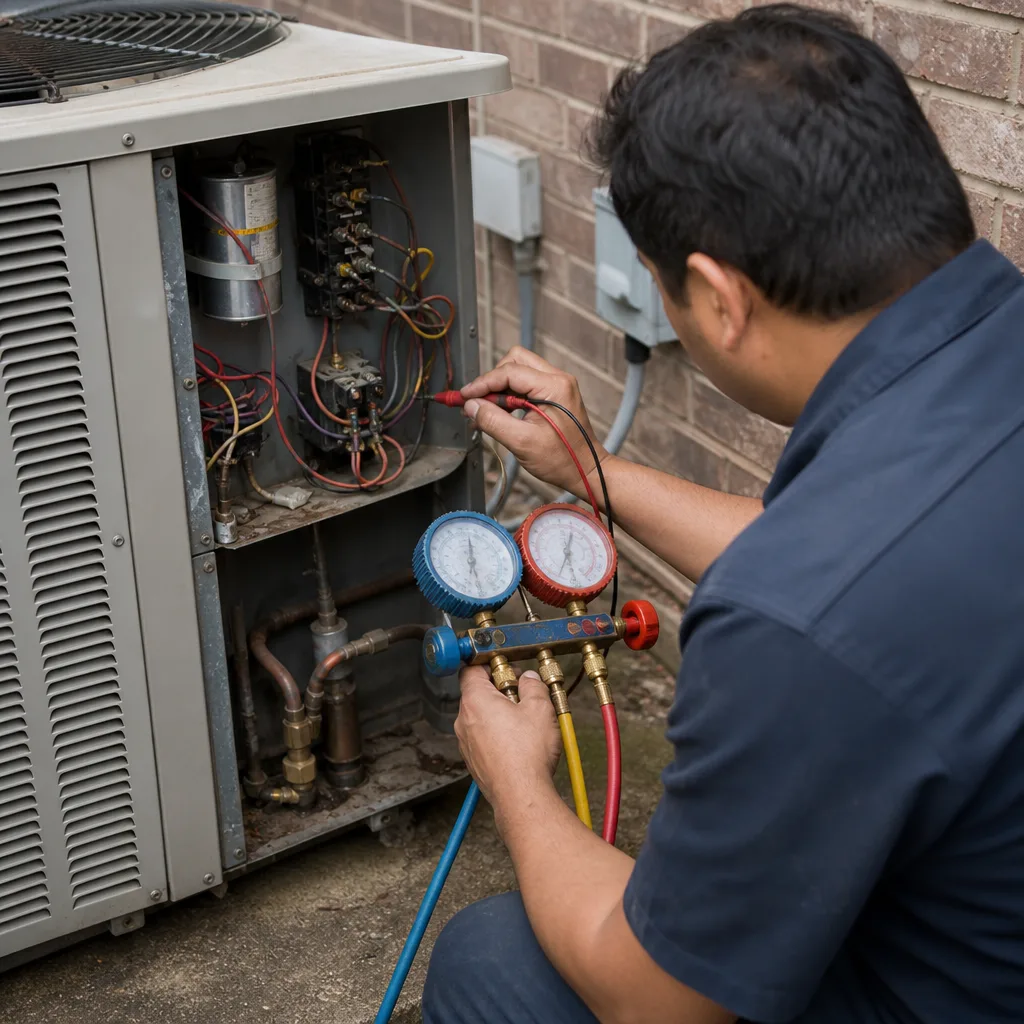 Before
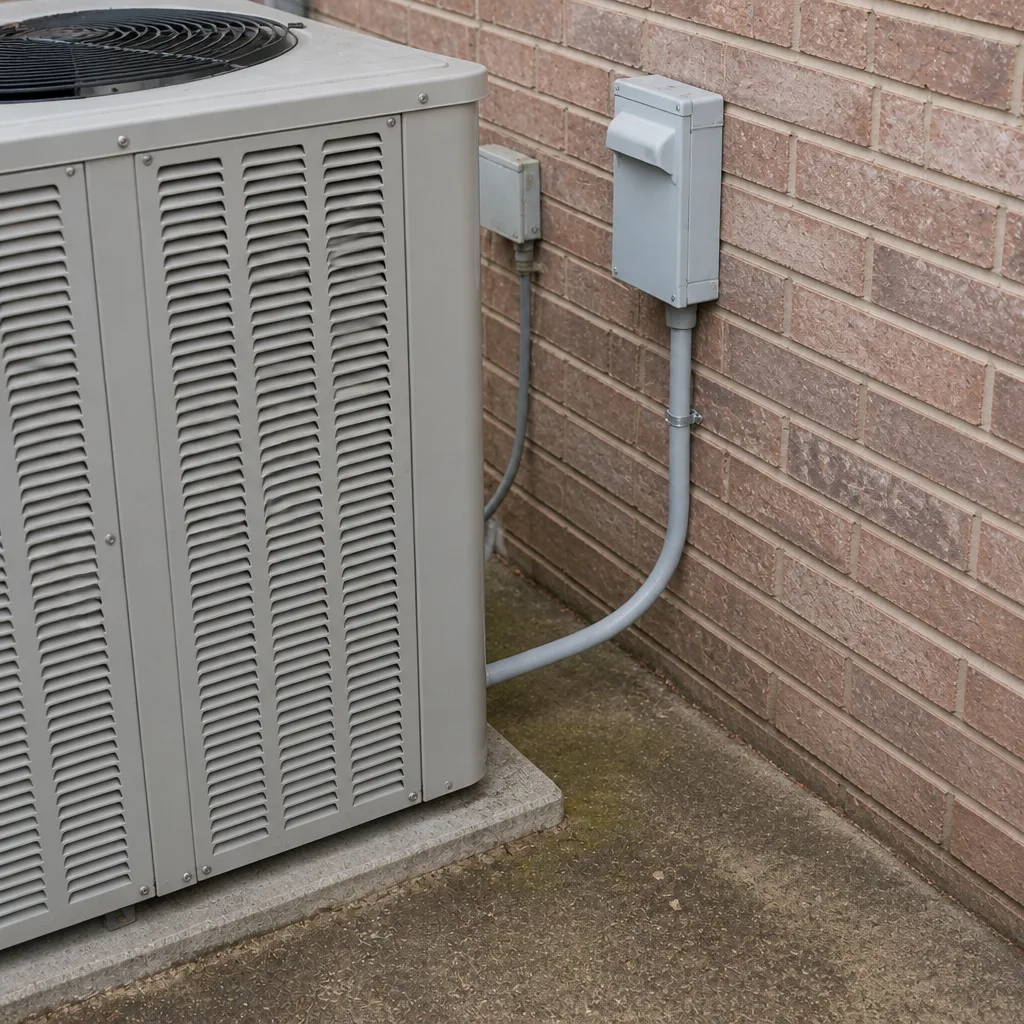 After
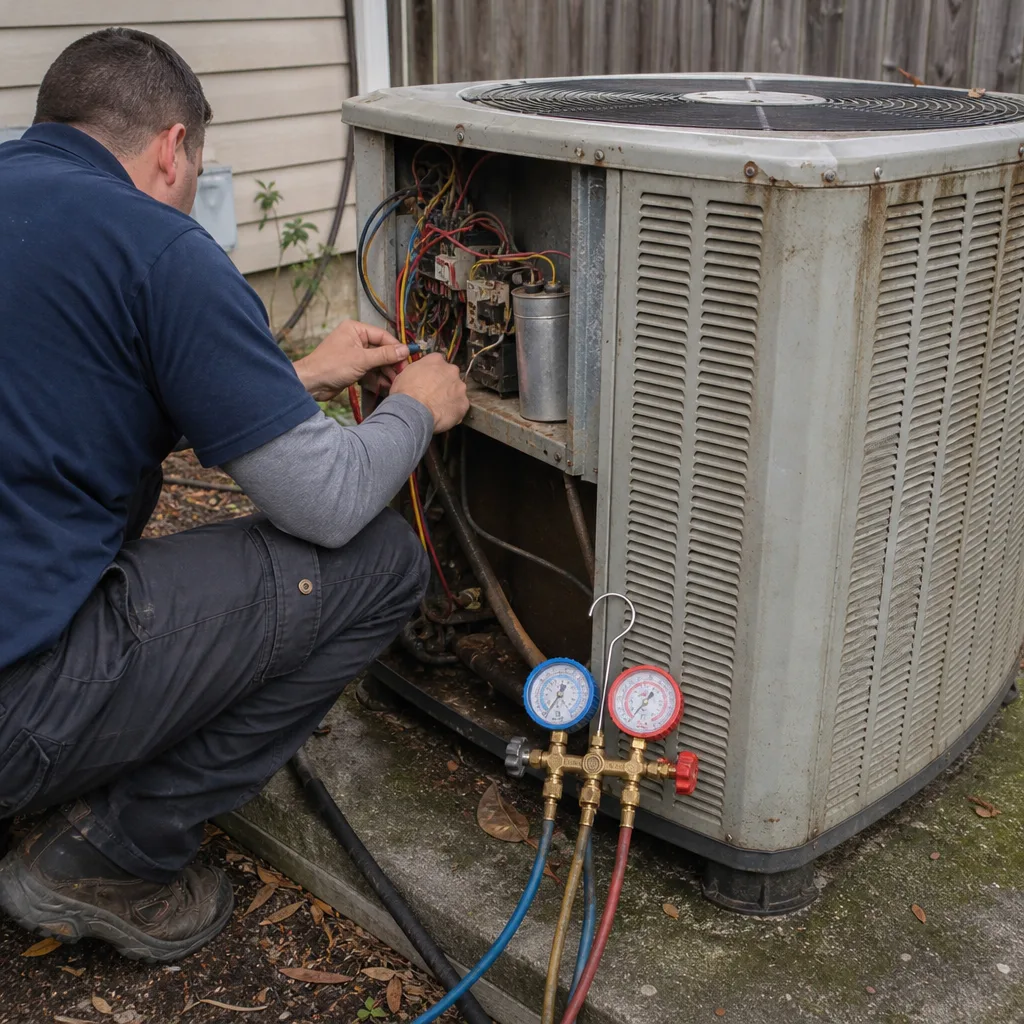 Before
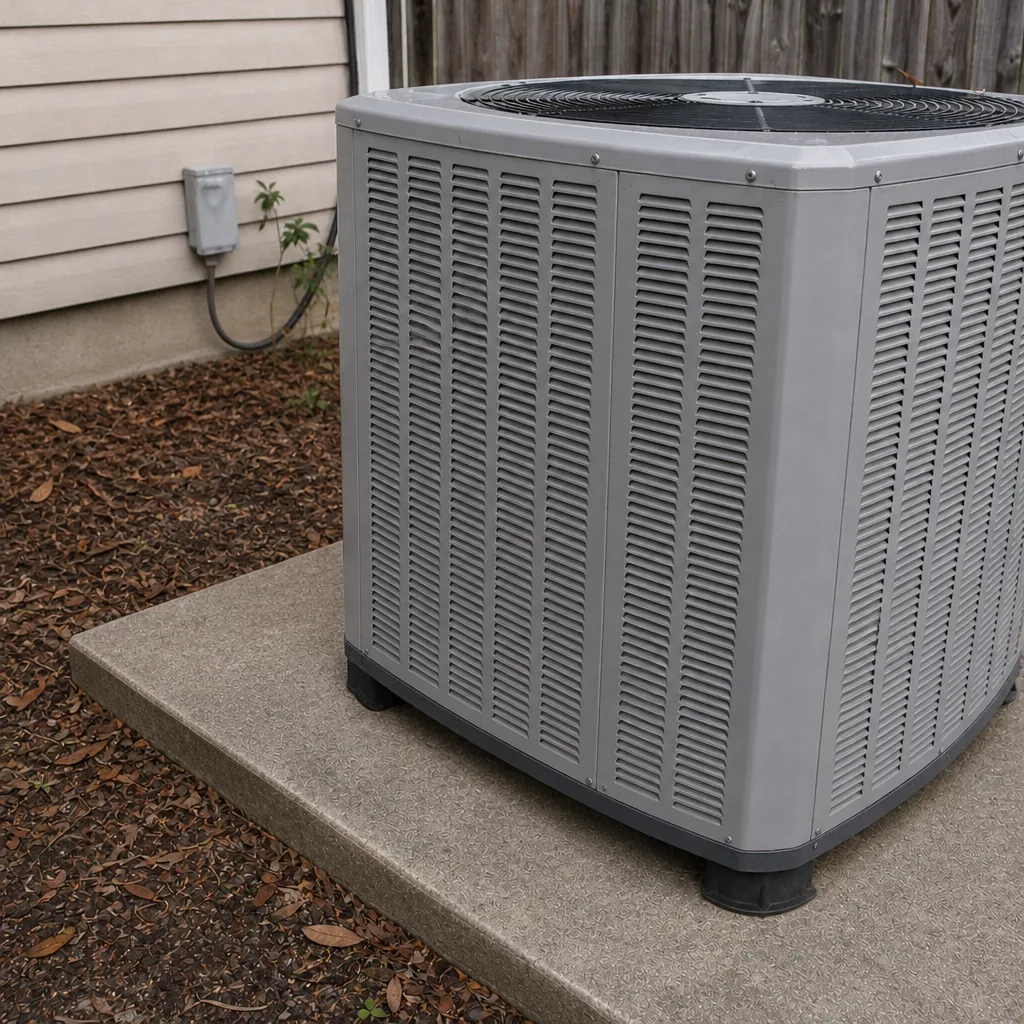 After
When to Call a Professional
Some jobs need a technician, plain and simple. Call if your system won’t start or blows warm air, if the outdoor unit hums but doesn’t spin, if the breaker trips repeatedly, if there’s water around the indoor unit or a clogged drain you can’t clear, if the outdoor coil is badly packed and you don’t want to risk bending fins, or if you smell gas near a furnace. Call before the first 100°F stretch for a pre-season inspection if your system has never been serviced in the past year. Electrical component testing always belongs with a trained technician – capacitors and contactors are genuinely dangerous. Whitman AC Repair offers free estimates in Mesquite – call (866) 964-4152. We answer 24/7. Fast dispatch from 7am to 7pm, Sunday through Friday.
Frequently Asked Questions
Twice a year is the right target in Mesquite: once after cottonwood season in late spring or early summer, and once again after any period of heavy construction dust nearby. Cleaning more often is fine if you live near a busy road or an active building site. Rinse the fins gently with a garden hose on low pressure, with the system off.
Mesquite’s humid season puts a lot of water through the condensate line, and algae and mineral scale accumulate faster than in drier climates. If it clogs every year, have a technician inspect for hard-water scale, install a clean-out port if you don’t have one, and check the float switch. A professional can confirm the drain is pitched correctly. Call (866) 964-4152 for a free estimate on a drain inspection.
Yes. A mixed-brand system needs the stricter of the two manufacturers’ maintenance schedules, and the technician should know the full picture before the visit. Follow the shorter filter interval between the two. We work on both brands and on nine major HVAC brands in total, so one call covers the whole system.
Look for visible white or chalky scale on the pan, drain line interior, or humidifier components. A humidifier that’s running but not keeping up is another sign. Rinsing and inspecting at the start of each season catches most problems early. If you’re seeing heavy scale, ask a technician whether your water quality warrants a faster inspection cadence.
No. Capacitors store a dangerous electrical charge even after the power is off, and the contactor carries line voltage. Testing requires a trained technician with the right meter and safety procedure. If your system won’t start or the outdoor fan doesn’t spin, call a professional rather than opening the electrical panel. Call (866) 964-4152 – estimates are free.
Clear the condensate drain before the first sustained 100°F week, usually late May or early June. In our experience, it’s the task most often skipped and the one whose failure causes the most disruption. Change the filter monthly, clean the outdoor coil twice a year, and have the electrical components tested annually. Everything else flows from those four.
The Bottom Line
AC maintenance in Mesquite isn’t a generic checklist. It’s sequenced around the specific failure patterns this climate produces: a condensate drain that clogs first, an outdoor coil that loads twice a year, electrical components stressed by 60-plus consecutive days at high load, a mixed-brand system that may need two sets of intervals, and hard water that quietly degrades drain pans and humidifiers. Change the filter monthly. Clear the drain before June. Clean the coil after cottonwood and after construction dust. Have a technician test the capacitor and contactor annually. Catch the rest with a pre-season visit. Get this right and you’ll spend less time calling for repairs and more time enjoying your home.
If you’re ready for a pre-season maintenance visit or you’ve spotted something on this checklist that needs attention, call us. Whitman AC Repair handles AC repair, AC installation, and furnace repair across the brands you already own. Free estimates. Call (866) 964-4152. We answer 24/7. Fast dispatch from 7am to 7pm, Sunday through Friday.
Written by the team at Whitman AC Repair.