
Last updated November 15, 2026
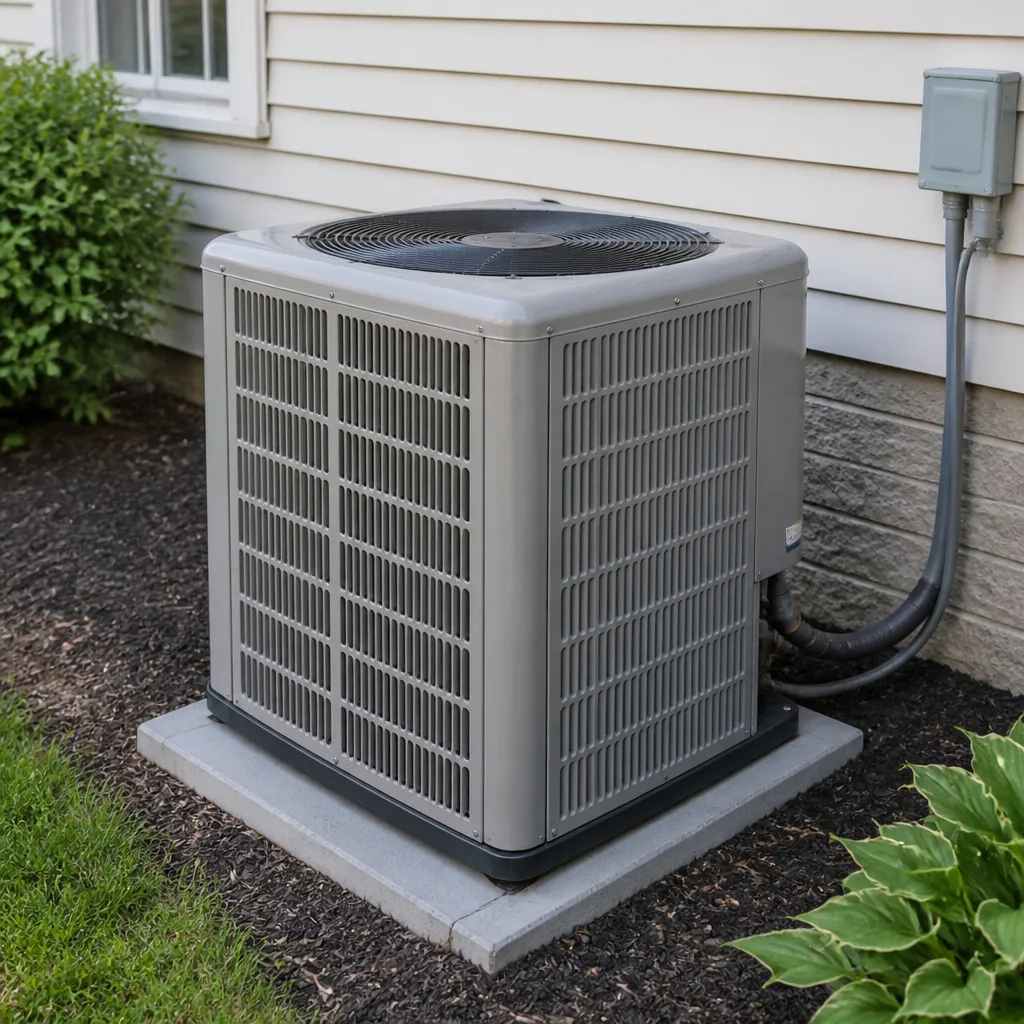 AC repair
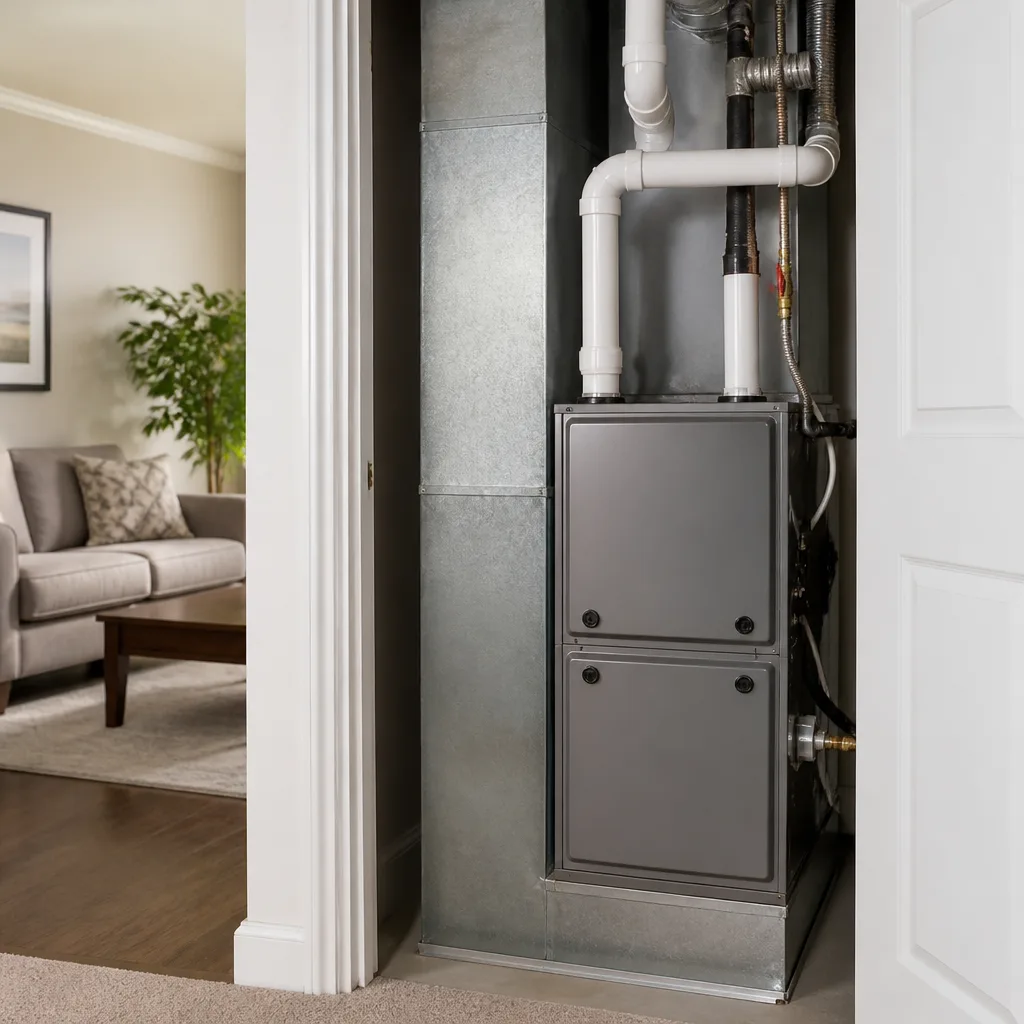 Furnace & heating
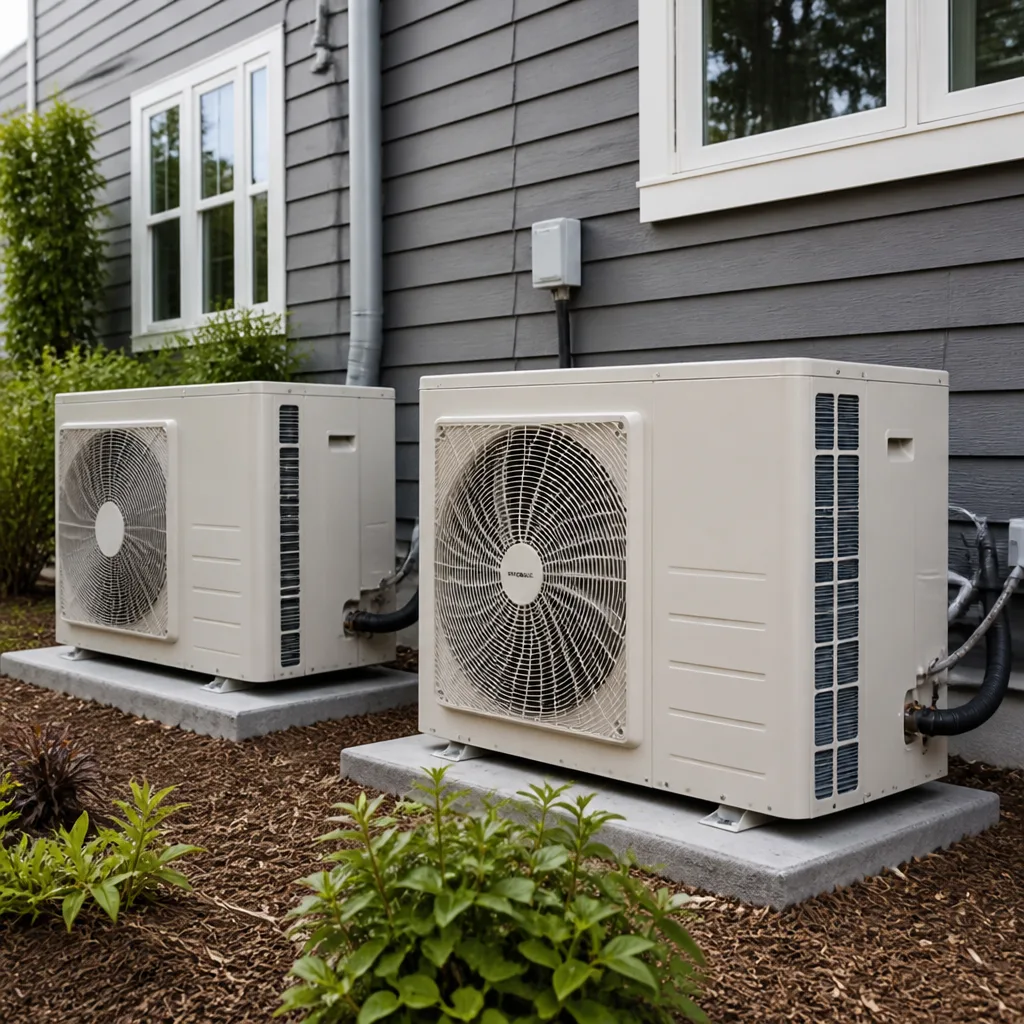 Heat pumps
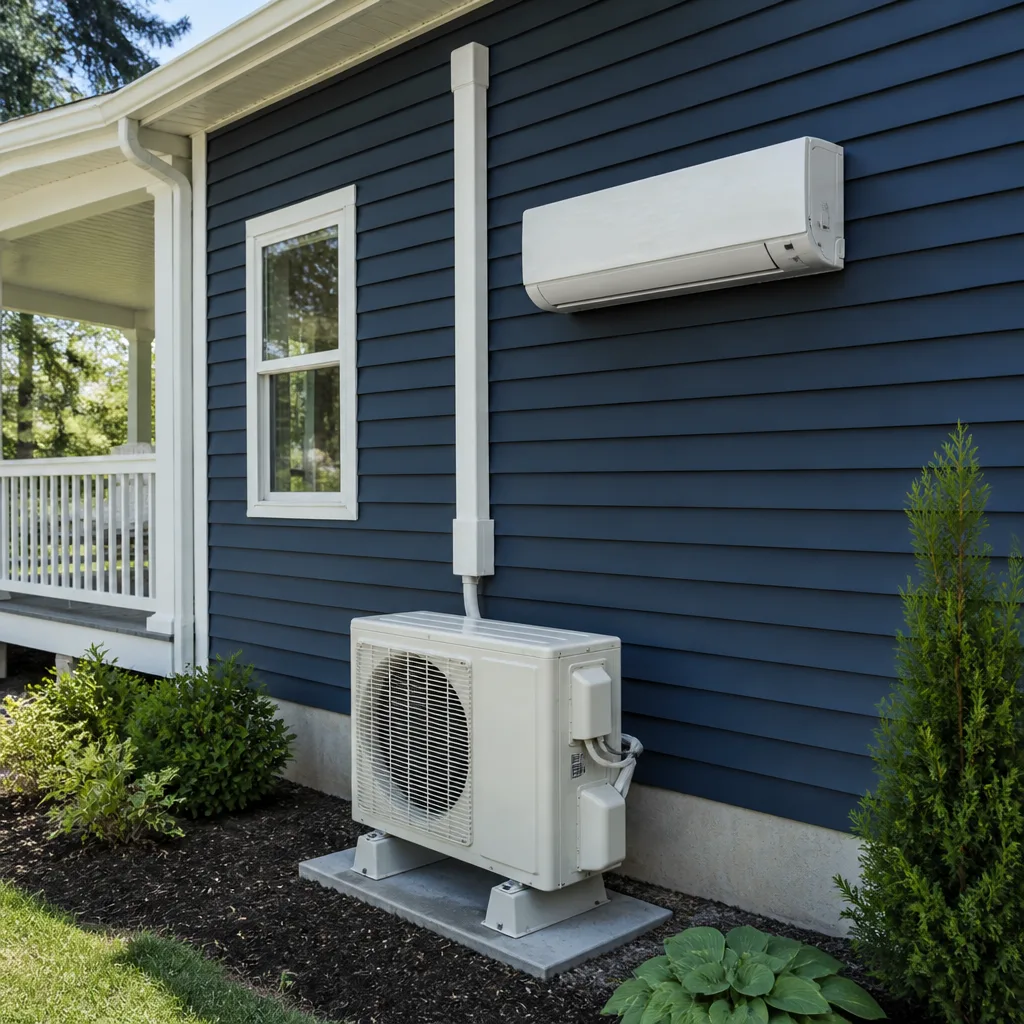 Ductless mini splits
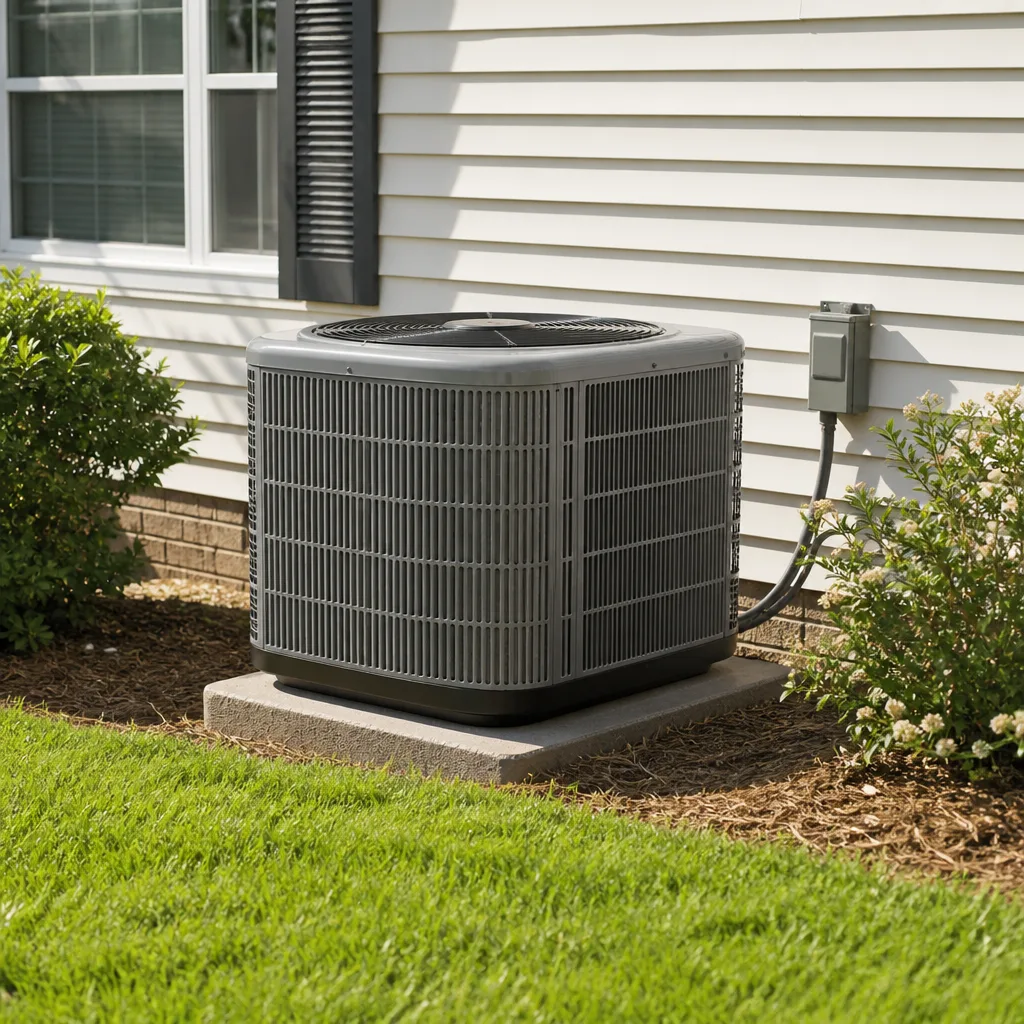 Carrier
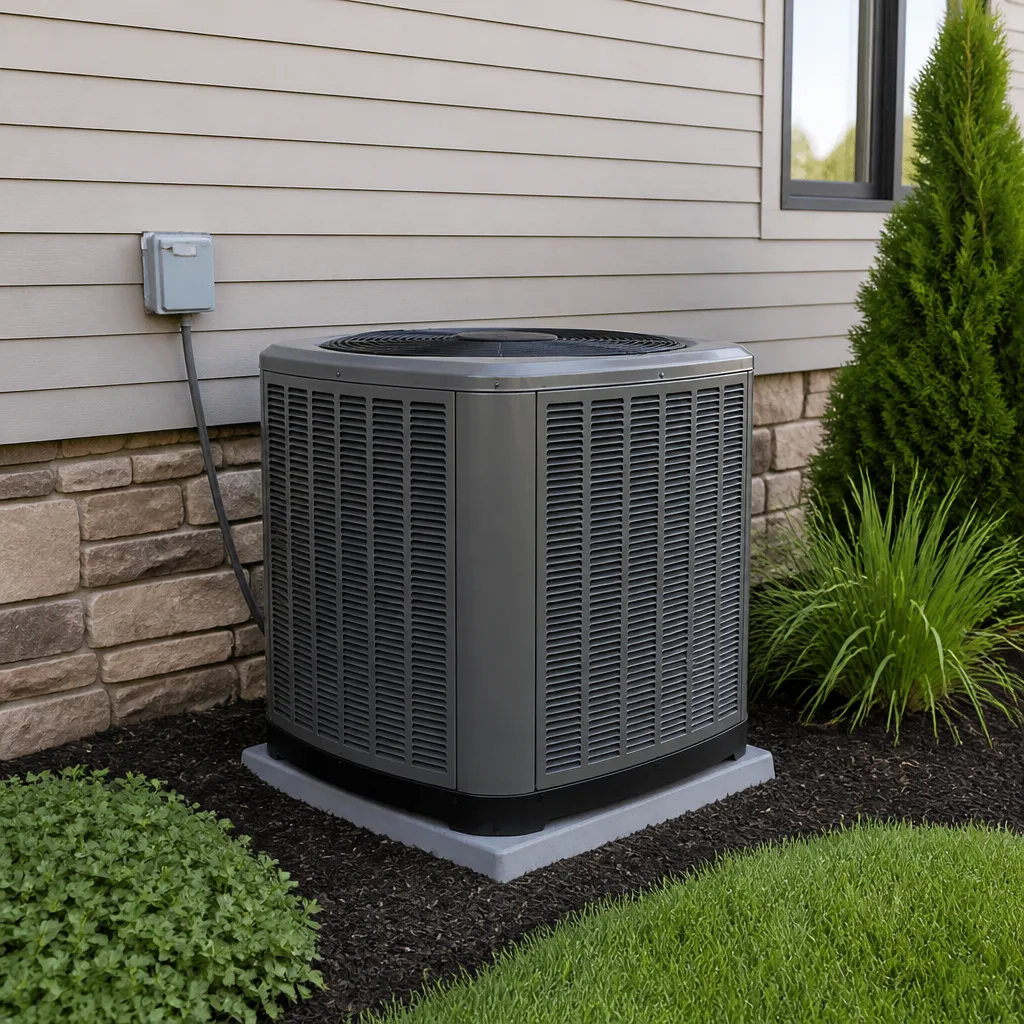 Trane
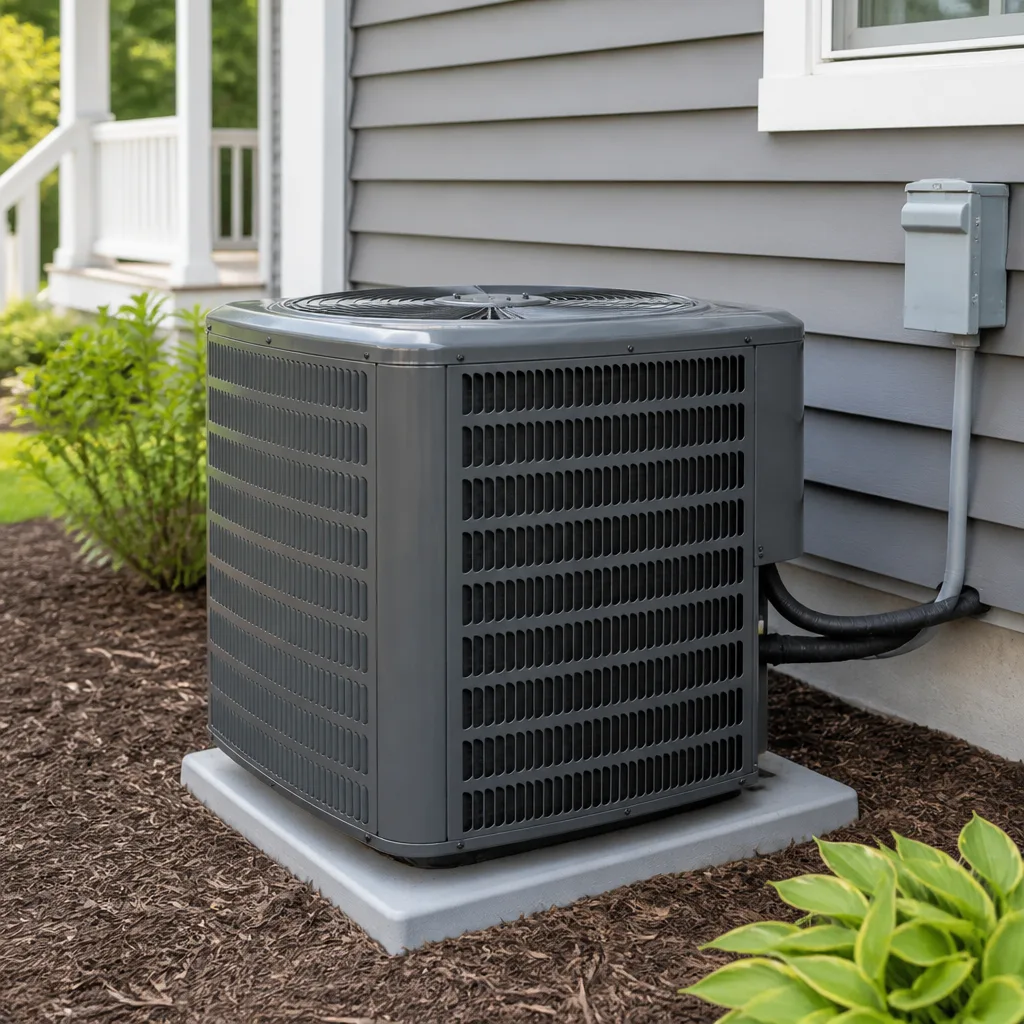 Goodman
Seasonal tune-up and full diagnostic on your Carrier, Trane, or Goodman system - readings shown to you before any repair is proposed
Diagnosis first, numbers second - you approve the repair price before a single part goes in.
Get your free estimateSeasonal HVAC Care for Mesquite: Year-Round Homeowner’s Guide
Most homeowners treat HVAC care as a four-season checklist, and that’s where things go wrong in Mesquite. This city doesn’t get four equal seasons. It gets a long, punishing cooling season, a short shoulder window in the fall, and a winter heating demand that catches people off guard because the furnace has sat idle since spring. February is when heating systems fail most visibly here, not because they’re old or neglected, but because nobody checked the igniter, the heat exchanger, or the gas valve before the first cold snap arrived. This guide lays out a care calendar built around Mesquite’s actual weather rhythm, so you know what to check and when. You’ll learn the March cooling prep window, the winter tasks that matter most, and why October through November is the best time for efficiency work.
Quick Answer
Seasonal HVAC care in Mesquite should follow the local climate, not a generic template. Start cooling prep in March before the May heat spike, schedule heating checks in late fall before the first freeze risk, and use the October-November shoulder season for duct sealing, refrigerant charge checks, and filter upgrades. Multi-brand systems with mismatched component ages should be serviced on the schedule of the oldest component, not the newest.
Styles & brands we work with
- AC repair
- Furnace & heating
- Heat pumps
- Ductless mini splits
- Carrier
- Trane
- Goodman
Table of Contents
- Why Mesquite Doesn’t Have Four Equal HVAC Seasons
- The March Cooling Prep Window (and Why May Is Too Late)
- Peak Summer: What to Watch Between June and September
- October-November: The Shoulder Season for Efficiency Work
- Winter Heating Prep Around Mesquite’s Freeze Risk
- Heat Pump Defrost Cycles in North Texas Winters
- How Mismatched System Ages Change Your Maintenance Schedule
- Filters, Coils, and the Tasks You Can Handle Yourself
Why Mesquite Doesn’t Have Four Equal HVAC Seasons
Walk into any big-box store in March and you’ll see the same seasonal HVAC displays you’d see in Ohio or Oregon. That’s fine for shelf space, but it has almost nothing to do with how systems actually fail in Mesquite. Our cooling season runs long, our shoulder season is short, and our heating season is brief but not gentle. The result is that air conditioners here accumulate far more run hours per year than furnaces, and the furnace spends most of the year in standby, waiting for the two or three weeks a year when it actually matters.
That imbalance shapes everything about maintenance. An AC that runs eight months a year needs its coil cleaned, its refrigerant charge verified, and its drain line flushed on a tighter cycle than a unit in a cooler climate. A furnace that runs six weeks a year mostly needs to be checked for readiness, not wear: a clean igniter, a clear flue, a heat exchanger with no cracks, and a gas valve that opens when it should. Skipping that check because the furnace “worked last year” is how February failures happen.
We structure our seasonal work around that reality. Homes across Mesquite, from the older blocks near downtown to the newer subdivisions off Cartwright Road, tend to have the same pattern: heavy cooling demand, light but critical heating duty, and a shoulder season that’s easy to miss if you’re not paying attention. Getting the calendar right matters more than doing more maintenance tasks. Doing the right task at the wrong time often does nothing.
Here’s the general shape of the year, laid out as a schedule rather than a list of chores:
- March: Cooling system prep, filter change, outdoor unit cleaning, drain line check.
- April: Last call for anything found in March that needs parts or scheduling before the first heat wave.
- May-September: Peak cooling season, monthly filter checks, watch for rising energy bills or short cycling.
- October-November: Shoulder season, the ideal window for duct sealing, refrigerant verification, and efficiency upgrades.
- December-February: Heating system readiness checks, heat pump defrost verification, and gas furnace inspections before the coldest weeks.
If you only remember one thing from this section, make it this: your calendar should look like this one, not the one printed on the back of a furnace filter box.
The March Cooling Prep Window (and Why May Is Too Late)
Most Mesquite homeowners don’t think about their AC until the first 90-degree day in May, and by then the repair queue is already long. March is when the smart work happens. The system has been mostly idle through the mild months, which means any small issue that developed over the winter hasn’t been masked by constant operation yet. A technician can find a weak capacitor, a dirty coil, or a slow refrigerant leak in March far more easily than in July, when the unit is running hard and every symptom looks like an emergency.
The March cooling prep window is also about parts availability. If a check turns up a failing contactor or a blower motor on its way out, there’s still time to order the right part before the season starts. In May, that same part might be on backorder. We work on nine major brands, including Carrier, Trane, Lennox, Goodman, Rheem, York, Daikin, Bryant, and American Standard, and even with that breadth, getting ahead of the season in March is always easier than chasing it in May.
Here’s what a solid pre-season cooling check covers:
- Clean or replace the air filter and check that the filter size and MERV rating match the system’s spec.
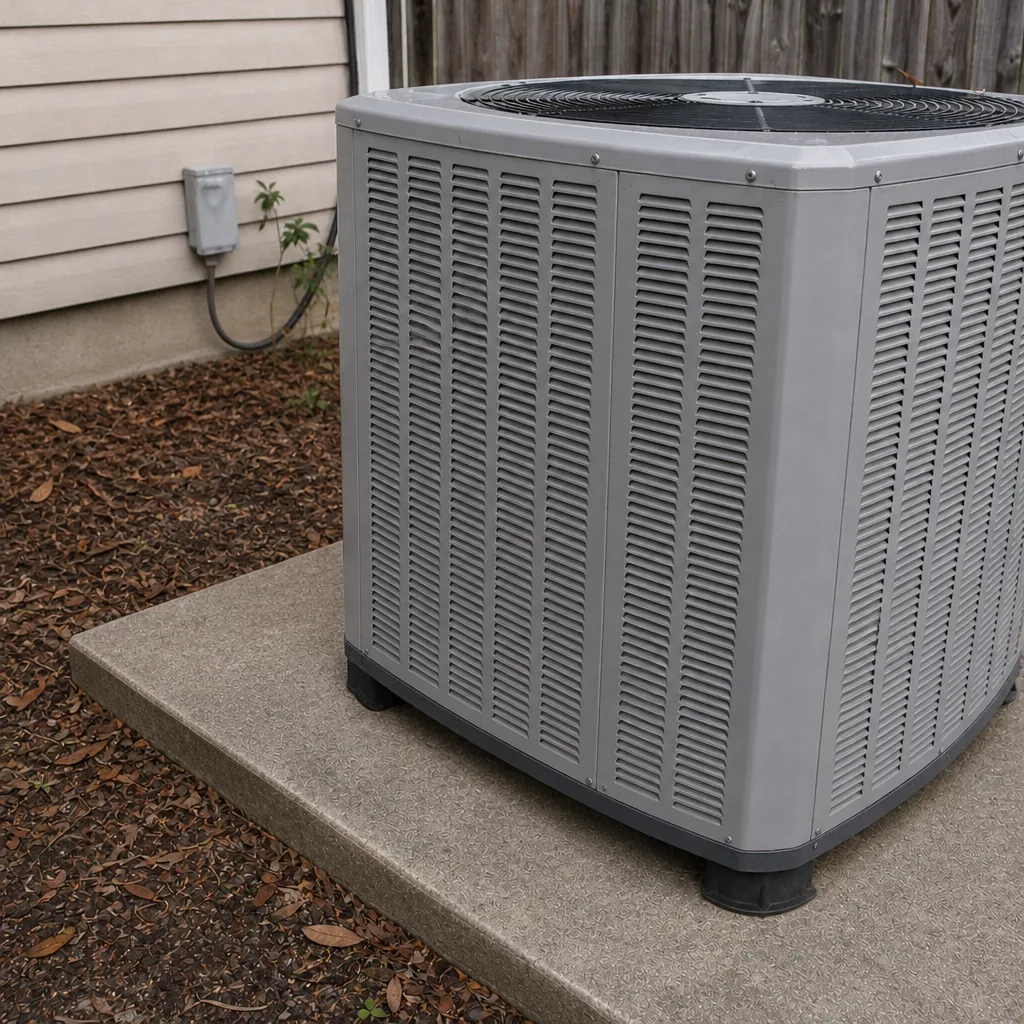
- Wash the outdoor condenser coil and clear debris from around the unit. In Mesquite, cottonwood fluff and grass clippings are the usual suspects.
- Check refrigerant charge with gauges; low charge is often the first sign of a slow leak.
- Test the capacitor, contactor, and blower motor for signs of wear before they fail mid-summer.
- Flush the condensate drain line and verify the float switch works.
- Measure temperature split between supply and return to confirm the system is moving heat the way it should.
If everything checks out in March, you go into May with a system that’s already been verified. If something turns up, you have time to fix it on a normal schedule rather than an emergency one. Call (866) 964-4152 if you want to get on the March schedule before the spring rush. We answer 24/7.
Peak Summer: What to Watch Between June and September
Once the cooling season is running flat out, your job shifts from prep to monitoring. In Mesquite, that means paying attention to three signals: how long the system runs to reach setpoint, how the house feels versus what the thermostat reads, and what your electric bill is doing compared with the same month last year. Any of those shifting in the wrong direction is a sign worth investigating before it becomes a breakdown.
A unit that ran 20 minutes per cycle last June but is now running 45 is working harder for the same result. That could mean a dirty coil, a refrigerant leak, a failing blower, or a duct problem. None of those get better on their own, and all of them stress the compressor. The compressor is the most expensive single component in a residential system, so protecting it is the entire point of monitoring.
Monthly tasks during peak season are simple but easy to skip:
- Check the filter every 30 days and replace it if it’s visibly loaded. Homes with pets or heavy dust replace more often.
- Look at the outdoor unit for debris, plant overgrowth, or anything blocking airflow within two feet of the coil.
- Listen for new noises: rattling, buzzing, or a compressor that starts and stops rapidly.
- Watch for ice on the indoor coil or the refrigerant lines. Ice means something is wrong, even when the house is cool.
- Check the condensate drain pan for standing water. A clogged line in August turns into a water damage problem fast.
If you notice any of the above and you’re not sure what it means, a same-day visit is the right move. Call (866) 964-4152. We answer 24/7. Fast dispatch from 7am to 7pm, Sunday through Friday. If you need AC repair, we’d rather see the system in June than replace a compressor in August.
One more note for peak summer: don’t set the thermostat to a lower number than you want and expect the house to cool faster. It doesn’t work that way. The system cools at a fixed rate regardless of setpoint. Setting it to 68 to speed things up just means the unit runs longer at the end of the cycle.
October-November: The Shoulder Season for Efficiency Work
The weeks between the end of cooling season and the first real cold snap are the best time of year to do efficiency work in Mesquite. The system isn’t running hard, technicians have more schedule flexibility, and any upgrade you make now pays dividends through both the heating season and the next cooling season. This is the window where duct sealing, refrigerant charge verification, and filter upgrades make the most sense.
Duct sealing is the biggest one. In our experience, a lot of the cooling loss in older Mesquite homes happens in the ducts, not the equipment. Attic ducts get hot, joints loosen over time, and every leak pulls in unconditioned air. Sealing those joints in October means the system isn’t fighting itself all summer next year. It’s also work best done before the attic gets cold enough to make the job miserable, which in Mesquite means before December.
Refrigerant charge checks are worth doing in the shoulder season too. If the system lost a little refrigerant over the summer (a common pattern with slow leaks), getting the charge corrected in October means you start spring with a properly charged system rather than discovering the problem in June. A charge that’s off by a small amount doesn’t always show up as a comfort complaint, but it does show up on the electric bill.
Filter upgrades also fit here. If you’ve been running basic fiberglass filters, moving to a pleated filter with a higher MERV rating can help with dust and allergens, but only if the system can handle the added static pressure. That’s why the shoulder season is the right time: there’s room to test the change before cooling season puts it to work.
Other shoulder-season tasks worth doing:
- Inspect ductwork in the attic and crawlspace for disconnected sections and obvious leaks.
- Verify refrigerant charge and check for signs of leaks at fittings and the Schrader valves.
- Clean the indoor evaporator coil if it’s accumulated dust over the summer.
- Check the thermostat calibration and consider a programmable or smart model if you’re still on a basic unit.
- Test the heating system for the first time before the first cold front, not after.
If you’re thinking about new equipment rather than just tuning the existing system, October is also the right season to get a written quote on AC installation. The work isn’t load-calculated and scheduled in a single afternoon, so planning ahead beats scrambling in July. Call (866) 964-4152 for a free estimate.
Winter Heating Prep Around Mesquite’s Freeze Risk
Mesquite winters are mild most of the time, but they’re not nonexistent. The coldest weeks usually land in January and February, and they’re when furnaces that have sat idle since March get called into duty for the first time in ten months. That’s not a gentle transition for any system. It’s the equivalent of starting a car that’s been in the garage all year and expecting it to pull a trailer on the first drive.
Heating prep in Mesquite should focus on readiness, not wear. The furnace hasn’t accumulated many run hours, so the risks are the ones that come from sitting: a pilot that won’t relight, an igniter that’s gotten weak, a gas valve that’s stuck, a flue that’s been blocked by debris or a bird nest, or a heat exchanger with a crack that went unnoticed. That last one is the one to take seriously. A cracked heat exchanger can let carbon monoxide into the living space, and it’s the single most important thing a heating inspection looks for.
If you’re not sure how old your furnace is or when it was last inspected, don’t guess. Get it looked at before the cold arrives. Call (866) 964-4152. We answer 24/7. Fast dispatch from 7am to 7pm, Sunday through Friday.
For gas furnaces, the winter prep list looks like this:
- Inspect the heat exchanger for cracks, corrosion, or signs of overheating.
- Test the igniter and flame sensor; a dirty sensor is one of the most common no-heat causes.
- Check the flue and venting for blockage or improper slope.
- Verify the gas valve opens and closes cleanly and that the burners light evenly.
- Replace the furnace filter and confirm the blower moves air across the whole coil.
- Test the thermostat in heat mode and confirm it calls for heat properly.
For heat pumps, the winter checklist is different, and we cover it in the next section. Either way, the goal is the same: walk into January with a system that’s been verified, not one that’s about to surprise you.
Heat Pump Defrost Cycles in North Texas Winters
Heat pumps are increasingly common in Mesquite, and they have a winter issue that gas furnaces don’t: the defrost cycle. In heating mode, the outdoor coil gets cold enough to frost over, especially on damp, near-freezing mornings. The system is designed to handle this by reversing briefly into cooling mode to melt the frost, then returning to heating. When the defrost cycle works, it’s invisible. When it doesn’t, you get a system that ices up, loses capacity, and eventually stops heating.
Verifying the defrost cycle is a specific winter task, and it’s one of the things a heat pump check should cover before the coldest weeks hit. The technician runs the system in heating mode long enough to see it frost up, then confirms the reversing valve, defrost control board, and outdoor fan respond correctly. If the defrost is failing, the symptom often shows up as a unit that heats fine in the 50s but stops keeping up in the 30s.
What to watch for as a homeowner:
- Frost on the outdoor unit that doesn’t clear within an hour or two after a cold, damp night.
- Ice accumulation at the base of the outdoor unit that persists for days.
- Heating performance that drops sharply as outdoor temperatures fall below 40.
- The outdoor fan stopping while the compressor keeps running, especially on cold mornings.
If you see any of these, get the system checked before the coldest stretch. Call (866) 964-4152. We answer 24/7. Fast dispatch from 7am to 7pm, Sunday through Friday. Whether you have a Goodman, Rheem, York, Daikin, or any other major brand heat pump, the defrost verification works the same way: it’s a functional test, not a guess.
How Mismatched System Ages Change Your Maintenance Schedule
In a lot of Mesquite homes, the AC and the furnace weren’t installed at the same time. Maybe the AC was replaced ten years ago and the furnace is original to the house, or the furnace was updated during a remodel while the AC soldiered on. That mismatch is common, and it changes how you should schedule maintenance. The older component sets the pace. If the furnace is the older piece of equipment, the heating inspection becomes the priority task each fall, and the AC check can be lighter. If the AC is older, the reverse is true.
We see this constantly with multi-brand systems. A Carrier condenser paired with a Goodman furnace, or a Trane outdoor unit matched to a Rheem air handler, is not unusual. There’s nothing wrong with a mixed system as long as it’s serviced properly. But the mixed system needs asymmetric attention: the older, weaker component should get eyes on it first each season, and the newer one can follow a lighter schedule. Treating both as equal is how the older piece fails unnoticed.
Mismatched systems also change the repair-versus-replace conversation. If one component is near end of life and the other has years left, replacing only the failing piece is usually the smart move. We work on all nine major brands specifically so that decision stays grounded in what your equipment actually needs rather than what a dealer wants to sell. If you’re weighing repair against replacement, our guidance on when to repair your AC versus replace it walks through the decision honestly. Call (866) 964-4152 if you want a straight answer on your specific system.
Filters, Coils, and the Tasks You Can Handle Yourself
Not every seasonal task requires a technician. Filters, outdoor unit cleaning, and basic monitoring are things most homeowners in Mesquite can and should handle themselves. The general rule: if it doesn’t involve opening a panel with a capacitor or refrigerant behind it, it’s probably safe to do yourself. If it does, call a professional.
The monthly filter change is the single most important habit. A loaded filter restricts airflow, which stresses the blower and reduces cooling capacity. A pleated filter is usually a better choice than fiberglass, but check the system’s spec for the maximum MERV rating it can handle. Running a filter that’s too restrictive is worse than running a cheap one that’s fresh.
The outdoor unit should be kept clear. Cut back plants within two feet, sweep leaves off the top, and rinse the coil with a garden hose once or twice a season. Don’t use a pressure washer on the coil, and don’t try to open the cabinet to clean the inside of the coil yourself. That’s a technician job.
Tasks you can safely do yourself:
- Replace filters and keep track of the change date.
- Clear debris and vegetation around the outdoor unit.
- Rinse the outdoor coil with a garden hose.
- Check the condensate drain pan for standing water.
- Watch for changes in run time, comfort, or energy bills.
Tasks to leave to a professional:
- Anything involving the electrical panel or the capacitor.
- Anything involving refrigerant or the refrigerant circuit.
- Any gas line work, including checking the furnace gas valve.
- Duct sealing beyond basic visual inspection.
- Any work on the indoor coil or blower.
These two lists matter because the tasks on the second one carry real risk. Capacitors hold a charge, gas lines can leak, and refrigerant work requires tools and training. If you’re not confident, don’t guess. Call (866) 964-4152 for a free estimate.
Common Mistakes to Avoid
- Waiting until May to think about the AC. By the time the first heat wave hits, the repair queue is already long and parts are moving slower. March is when pre-season checks are worth doing in Mesquite.
- Assuming the furnace “worked last year” is enough. A furnace that ran fine in February of last year can still have a failing igniter, a heat exchanger crack, or a blocked flue this year. Sitting idle for ten months is exactly when small issues develop.
- Running a restrictive filter the system can’t handle. Higher MERV isn’t always better. A filter that strangles airflow costs more in efficiency loss than it saves in dust removal.
- Skipping the shoulder season. October and November are the best window for duct sealing and refrigerant charge checks in Mesquite, and most homeowners pass them up because the system isn’t acting up.
- Replacing only the newest component when the older one is the problem. Mismatched system ages confuse this decision. The older component is usually the one to address first.
- Ignoring frost on a heat pump. Frost that doesn’t clear within an hour or two is a defrost problem, not normal operation. Get it checked before the coldest weeks.
- Treating a general handyman as an HVAC tech. Filters and outdoor cleaning are fine to do yourself, but refrigerant, gas lines, and electrical work on HVAC equipment belong with a trained HVAC technician.
See the difference
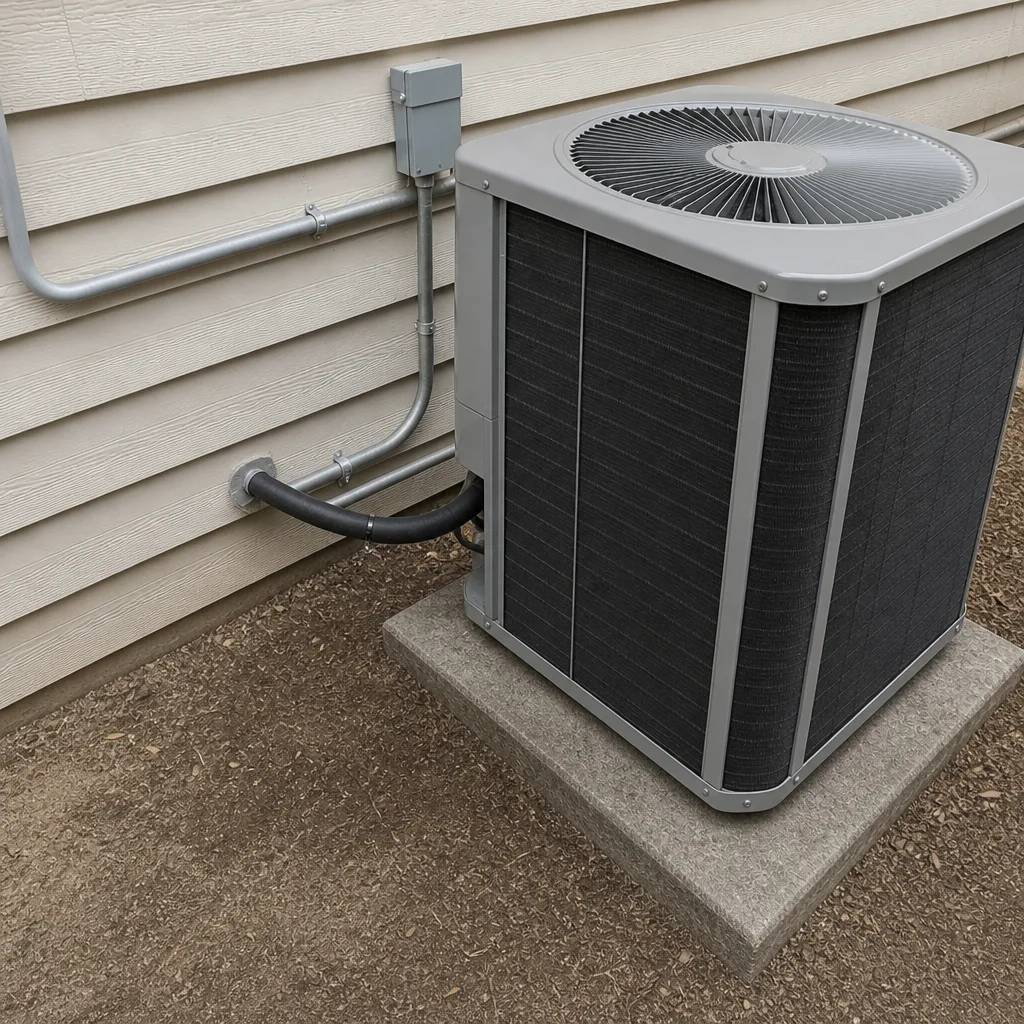
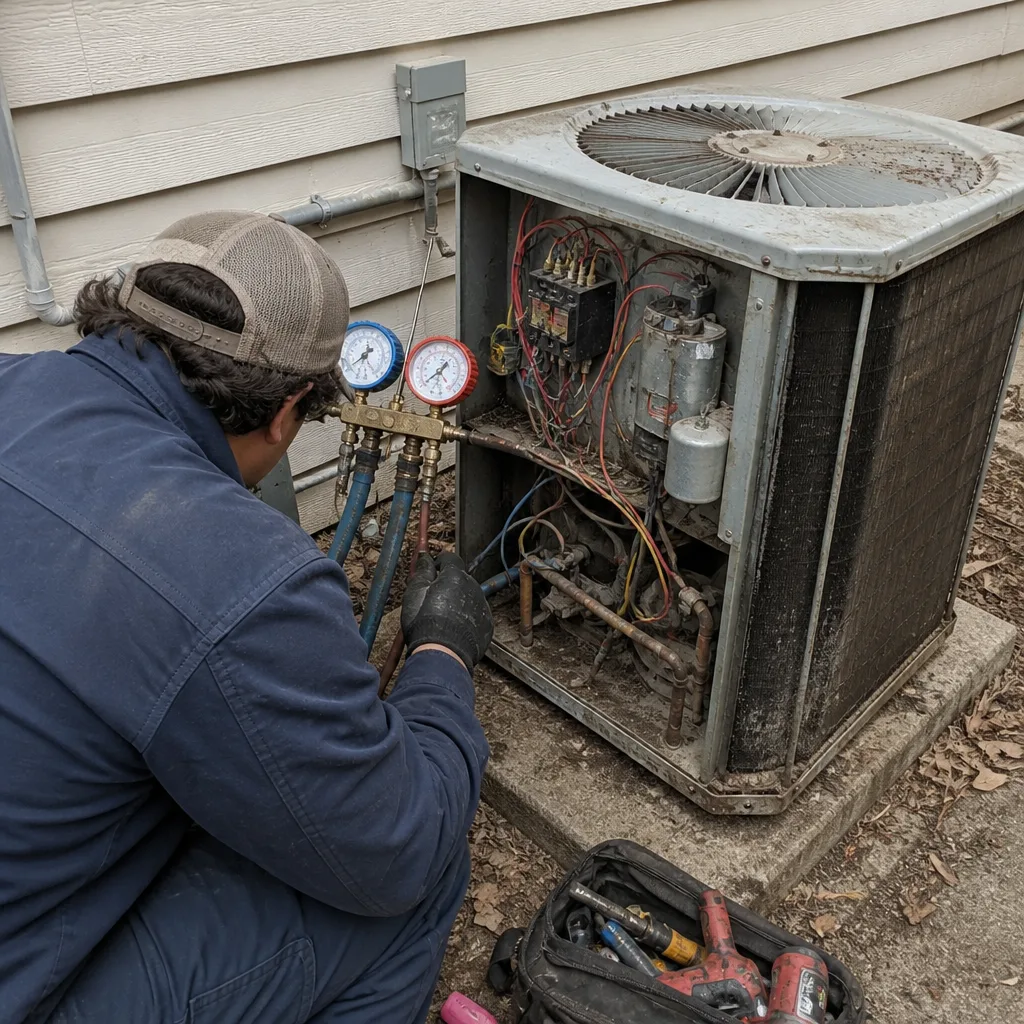 Before
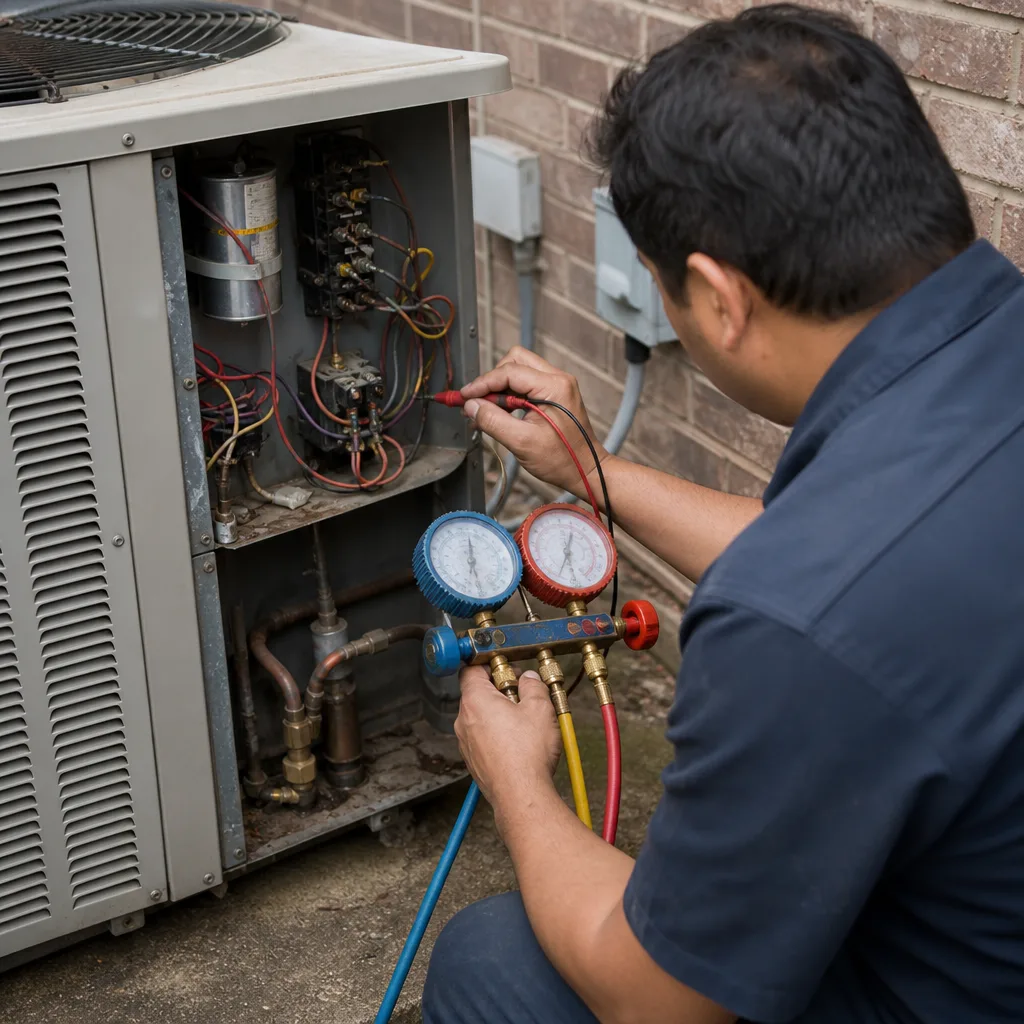
 After
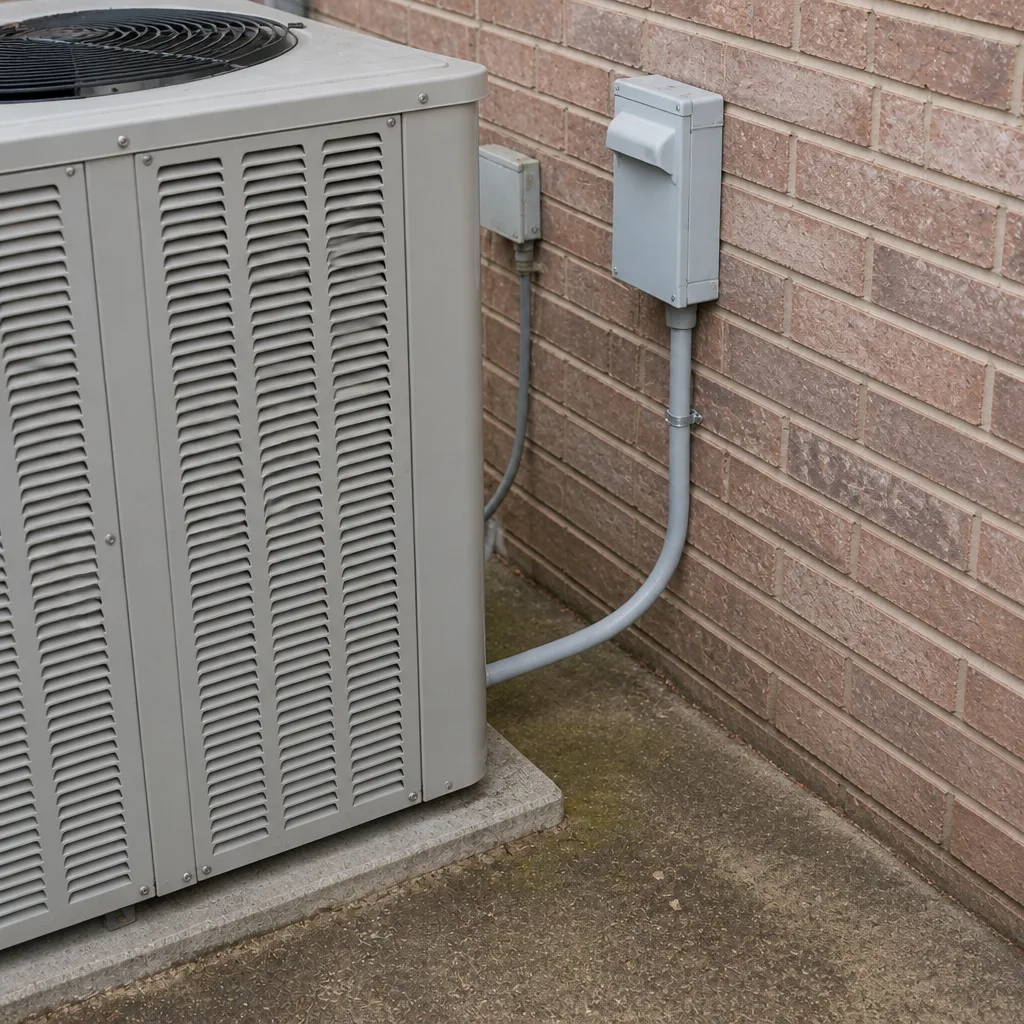
 Before
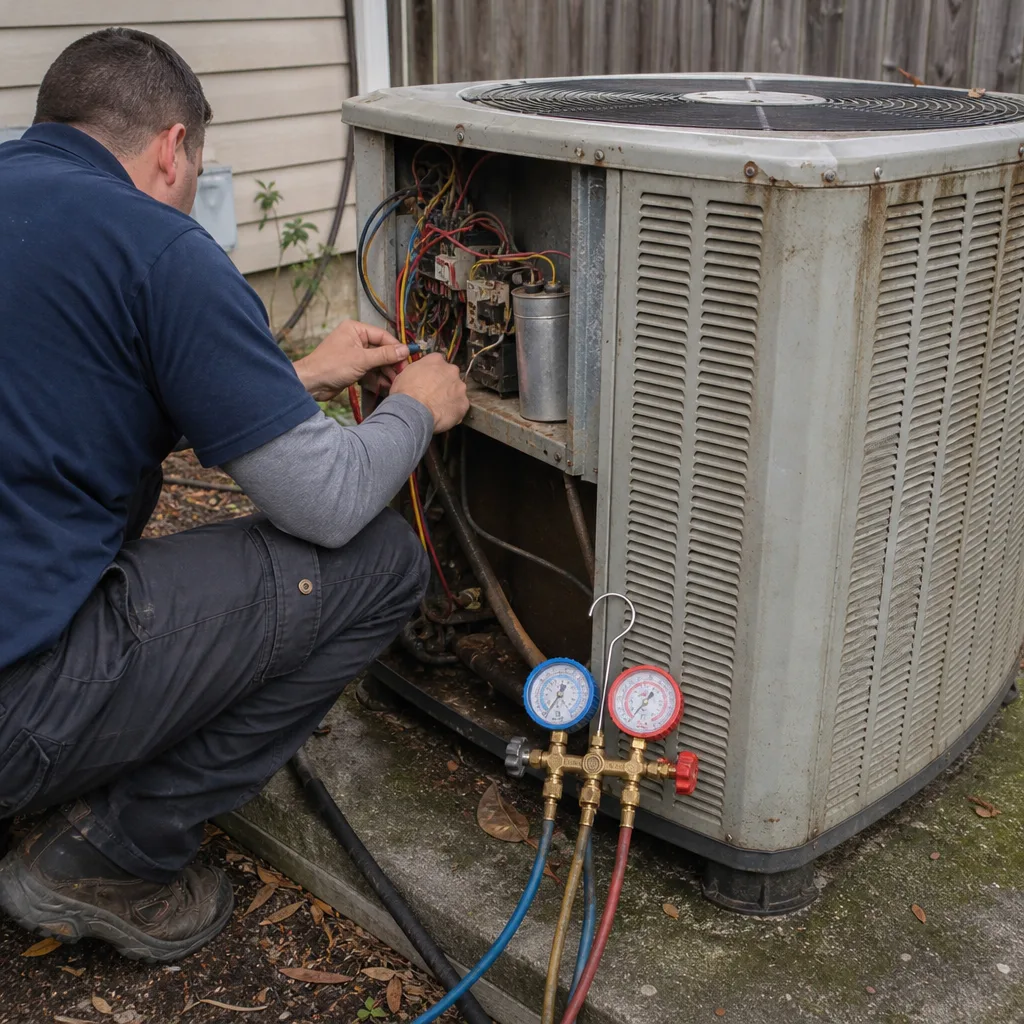
 After
 Before
 After
When to Call a Professional
Some tasks in this guide are yours to handle, but others should be a call. Get professional help if you see: frost on a heat pump that doesn’t clear, ice on the indoor coil in summer, standing water in the condensate pan, a furnace that won’t ignite, a smell of gas near the furnace, or any burning smell from the air handler. Those are all signs worth taking seriously, and ignoring them risks a bigger repair or a safety issue. For gas furnace work specifically, the heat exchanger and venting should always be inspected by a trained technician. That’s not a task for a homeowner to take on.
Whitman AC Repair offers free estimates in Mesquite, and we work on all nine major brands so the recommendation follows your system’s condition, not a dealer preference. Call (866) 964-4152. We answer 24/7. Fast dispatch from 7am to 7pm, Sunday through Friday.
Frequently Asked Questions
Once a year at minimum, and the right time is March, before the cooling season starts. In Mesquite a well-timed spring check catches issues while they’re still small and while parts are easy to source. If your system is older or has had past issues, ask your technician whether a second check in the fall shoulder season is worth doing. Call (866) 964-4152 for an exact schedule recommendation for your system – estimates are free.
Check it in the late fall, before the first freeze risk. The furnace hasn’t run much since spring, and readiness issues like a weak igniter or a blocked flue are best caught before you need heat. A heating check should include the heat exchanger, flue, gas valve, and igniter. Call (866) 964-4152 if you want it looked at before winter.
Yes. Heat pumps have a defrost cycle that should be verified before the coldest weeks, and the test is specific: the technician runs the system in heating mode and checks that it frosts and clears correctly. Gas furnaces don’t have this cycle. If you have a heat pump and aren’t sure when it was last checked, call (866) 964-4152.
March gives you schedule flexibility and access to parts before the cooling season’s demand peaks. May is when everyone else is calling at the same time. A check in March is cheaper in both money and stress than an emergency repair in July. Call (866) 964-4152 if you want to get ahead of the season. Estimates are free.
Yes, it should. On a mixed-brand system, the older component sets the maintenance pace. If the Goodman furnace is older, heating prep gets priority each fall. If the Carrier AC is older, the spring check gets more attention. We work on all nine major brands so the schedule follows your system, not a dealer. Call (866) 964-4152 to talk through yours.
Basic visual inspection is fine to do yourself, but actual duct sealing is worth hiring out. Attic ducts reach extreme temperatures in summer, and improper sealing can create pressure issues that hurt performance. The shoulder season, October through November, is the right time for it. Call (866) 964-4152 for a free estimate.
The Bottom Line
Mesquite HVAC care isn’t a four-season checklist. It’s a climate-specific calendar: cooling prep in March, peak-season monitoring through September, efficiency work in the October-November shoulder, and heating readiness checks before the freeze. If your system has mismatched component ages, the older piece sets the pace. And if you’re ever unsure whether something needs attention, call before assuming. Whether you’re in Mesquite proper or anywhere nearby, one call can cover both your heating and cooling needs with a team that works on all nine major brands.
Call (866) 964-4152 for a free estimate. We answer 24/7. Fast dispatch from 7am to 7pm, Sunday through Friday. For a full overview of what we do, visit Whitman AC Repair.
Written by the team at Whitman AC Repair.